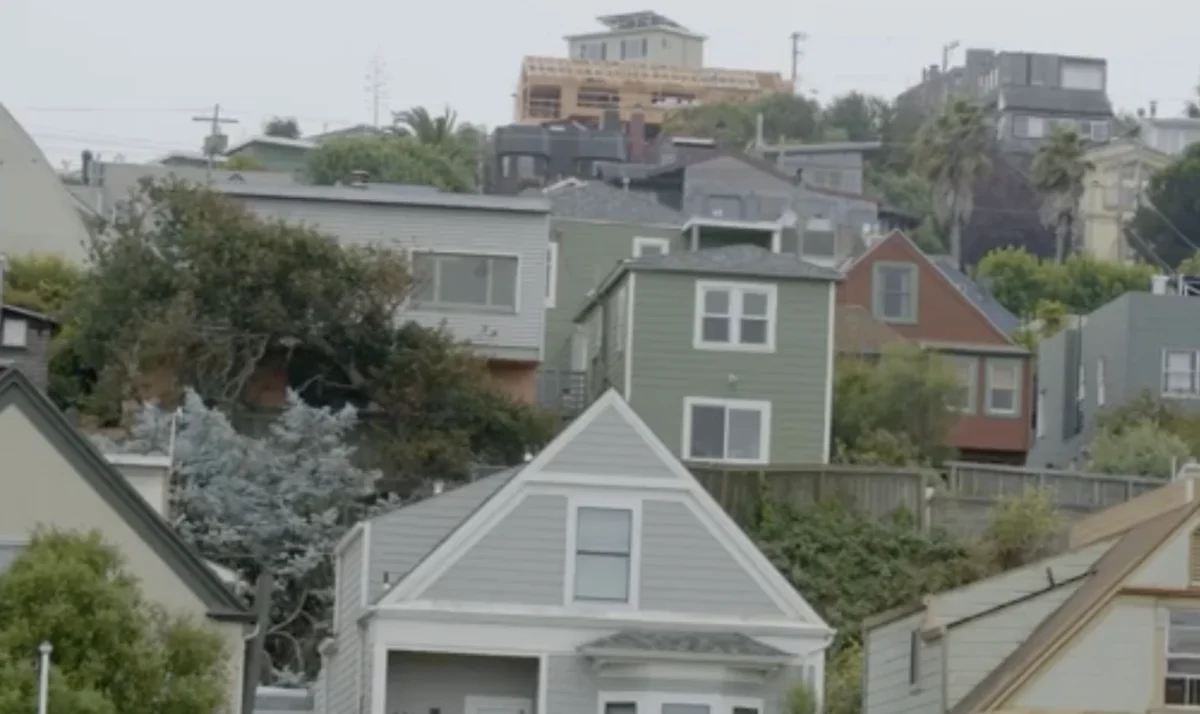
A City Where Houses Sell for Millions Over Asking, in Cash
In the first four months of 2026, nine homes in San Francisco sold for more than $2 million above their asking price. The following month, a six-bedroom home listed at $7.95 million sold for $15 million, the largest overbid the city has recorded this century. By May, the city’s median home price had climbed to a record $1.76 million, more than four times the US national median, and San Francisco had reclaimed its position as the most expensive city in America to buy a home, a title it had briefly lost to nearby San Jose.
This isn’t a generic housing cycle. It’s a concentrated, traceable flow of wealth from a single industry, and the evidence increasingly points to one specific source: liquidity events at AI companies converting paper equity into real cash, real estate agents, and real bidding wars. Understanding exactly how that mechanism works, who it benefits, who it displaces, and what it signals for anyone marketing to this newly wealthy population, is the real story underneath the headline price figures.
The Numbers: How Fast, and How Concentrated
San Francisco’s median home price rose 19% year-over-year in March 2026 alone, followed by gains of 14.5% in April and 14.1% in May, according to data from real estate firm Redfin. Compare that to the US national picture over the same months: price growth of just 1.4%, 2%, and 2% respectively. San Francisco isn’t experiencing a stronger version of a national trend, it’s experiencing something the rest of the country largely isn’t.
The bidding behavior tells the same story. Real estate firm Compass data, cited by the San Francisco Standard and San Francisco Chronicle, shows 144 San Francisco homes sold for at least $1 million over their asking price in the first half of 2026, compared with just 8 homes in the same period of 2025, an eighteen-fold increase. Single-family median prices in the city climbed from roughly $1.7 million to $2.2 million year-over-year as available inventory tightened. Price per square foot reached $1,194 by May, up more than $200 in nine months.
Rents have moved just as sharply. San Francisco rents rose 22% recently, pushing the city into a tie with New York for the most expensive two-bedroom apartments in the country, with median monthly rent hitting $5,500, according to apartment listing firm Zumper.
Tracing the Money: Why This Is an AI Story, Not Just a Tech Story
Claim: This boom is being driven specifically by AI industry wealth, not tech wealth broadly.
Evidence: San Francisco is home to an estimated 2,000-plus AI companies, and reporting from the Wall Street Journal found that more than 600 current and former OpenAI employees sold a combined $6.6 billion in company shares in a single liquidity event last October, with roughly 75 individuals hitting an individual cap of $30 million each. That’s a specific, dateable, quantifiable injection of concentrated personal wealth into a local market, distinct from broader tech-sector stock market gains.
Interpretation: Unlike wealth generated by long-term stock market appreciation, which accumulates gradually and disperses across a wide shareholder base, a single company-wide share sale event concentrates a massive amount of liquid, spendable cash into a relatively small number of hands, in a relatively short window, in a specific geographic area. That’s a very different economic force than a generally rising stock market, and it maps closely onto the timing and geography of San Francisco’s price surge specifically.
Limitation/counterpoint: Not every analyst agrees the AI narrative fully explains the market. Compass chief economist Mike Simonsen has pointed out that much of the wealth circulating in real estate markets historically comes from long-established public companies rather than newly liquid private ones, noting that Nvidia, a company that went public 27 years ago, has a substantial Bay Area presence and only recently added trillions of dollars to its valuation. This suggests the AI boom may be amplifying and accelerating an existing wealth-concentration trend in the Bay Area rather than single-handedly creating a new one from scratch.
A City Within a City: The “Cerebral Valley” Effect
The boom isn’t spread evenly across San Francisco. Business analysis has described a highly concentrated pattern nicknamed “Cerebral Valley,” clustered specifically around AI company hubs, most notably Mission Bay, where OpenAI alone leased nearly a million square feet of office space. That kind of large corporate anchor functions less like an ordinary real estate transaction and more like a gravitational center, pulling smaller AI startups, venture funds, and highly paid engineers into tight geographic proximity, all needing to live near their workplace and near each other.
The ripple effects extend beyond housing prices alone. Reporting has documented a surge in high-end service spending clustered around these newly wealthy buyers, sometimes described by wealth managers as “anchor spending”: multi-year, multimillion-dollar home renovations signaling long-term intent to stay, along with rising demand for premium contractors, private schools, landscapers, and even private security patrols in AI-adjacent neighborhoods.
The Human Cost: Bidding Wars, Cash Offers, and a Widening Divide
Behind the aggregate statistics are individual transactions that illustrate just how distorted the bidding process has become. Bloomberg reporting has documented unconventional deal structures emerging from the frenzy, including one seller who accepted an offer for an $8 million property structured, in part, around AI company shares rather than cash alone. Renters, meanwhile, are increasingly paying cash upfront just to be competitive for apartments, in a city where rental listings now sometimes resemble the same auction-style bidding seen in home sales.
The strain isn’t limited to lower earners. One tech worker relocating from Illinois described her projected rent for a two-bedroom apartment ballooning to $6,500 a month, telling Bloomberg the number was difficult to even process coming from a lower-cost market. That detail matters analytically: even well-compensated new arrivals, people who would be considered high earners almost anywhere else in the country, are being priced out of comfortable housing by a market recalibrated around concentrated AI equity wealth rather than typical salary-based affordability math.
Where the Wealth Isn’t: Displacement and the Two-Tier City
The other side of this story is what happens to the people this wealth isn’t reaching. Multiple analyses now describe San Francisco as splitting into what economists call a K-shaped pattern, luxury and AI-adjacent housing accelerating upward, while segments of the market serving lower- and middle-income residents stagnate or decline. Redfin senior economist Yingqi Xu has directly tied this divergence to concentrated AI wealth specifically, noting that the same pattern doesn’t appear in comparable markets without a similar concentration of AI industry wealth.
The pressure is beginning to spill beyond San Francisco’s own borders. Across the bay in Oakland, housing officials are watching for displacement effects as residents priced out of San Francisco look for more affordable alternatives nearby. Oakland rents rose roughly 6% between May 2025 and May 2026, and metro-area apartment rents climbed more than 9% year-over-year, according to real estate data firm CoStar, a meaningful turnaround from a market that had been largely flat for years prior. Oakland’s housing director has described anticipating some spillover from San Francisco’s AI-driven boom, even as the city has simultaneously ramped up affordable housing investment, funding 645 new affordable apartments in 2025 alone and committing to 1,400 more low-income units over the next two years, an intentional policy counterweight to displacement pressure rather than a market response.
Notably, not every tech-heavy city is experiencing the same trend. In Washington state, more than 11,000 tech industry workers have lost their jobs since May 2025 amid AI-related restructuring at companies including Amazon, Oracle, and Meta, and Seattle’s luxury housing market has moved in the opposite direction, with pending luxury sales down nearly 15% year-over-year. That contrast is itself analytically useful: it suggests the San Francisco effect isn’t simply “the AI industry is booming everywhere,” but something more specific to where AI wealth is being concentrated and cashed out, rather than where AI companies simply employ people.
The Policy Response Taking Shape
The scale of the divergence has become a live political issue. Rising housing costs are now a frequently discussed topic in California state politics, with a possible billionaire tax and housing affordability emerging as central themes in the state’s ongoing governor’s race. Whether any near-term policy response can meaningfully offset a wealth concentration effect this large and this fast-moving remains genuinely uncertain, and stands as one of the more consequential open questions this data raises for California policymakers over the next several years.
What This Means for Marketers and Business Researchers
For readers specifically interested in the marketing and business-research angle of this story, a few distinct implications are worth drawing out directly.
A new, cash-liquid buyer segment behaves differently than traditional affluent buyers. Buyers whose wealth arrived via a single concentrated equity liquidity event, rather than gradual salary accumulation, appear considerably less price-sensitive and more willing to transact in cash or non-traditional structures (including, in at least one documented case, company stock itself). Marketers and researchers studying luxury real estate, high-end renovation services, or premium consumer goods in this market should treat “newly AI-liquid” buyers as a behaviorally distinct segment from traditional high-net-worth buyers whose wealth accumulated over a longer, more predictable timeline.
“Anchor spending” is a genuine, trackable secondary market. The surge in premium contractors, private schools, landscaping, and security services clustered around AI-adjacent neighborhoods represents a measurable secondary spending wave tied directly to the primary housing boom, useful for any business or researcher modeling downstream demand from a concentrated wealth event rather than treating housing price appreciation as the endpoint of the story.
Total compensation math is being locally distorted for tech recruiters. For companies and recruiters competing for Bay Area AI and technical talent, salaries that look objectively competitive on paper are increasingly failing to account for the true local cost of living created by this dynamic. This has direct implications for compensation benchmarking, relocation packages, and employer-branding messaging aimed at technical hires being asked to relocate to or remain in the Bay Area.
Real estate marketing itself is adapting to auction-style dynamics. The shift toward what local coverage has described as a “bidmaxxing” market, aggressive, auction-style overbidding as a default expectation rather than an exception, represents a meaningful shift in how listing agents and real estate marketers are positioning inventory, often pricing intentionally low to generate competitive bidding rather than pricing at expected sale value.
Where This Investigation Has Limits
A few caveats are worth stating directly. First, isolating the precise causal weight of AI-specific wealth versus broader tech-sector and stock market wealth is genuinely difficult, and Compass’s own chief economist has cautioned against reading this purely as an AI story rather than a broader concentrated tech-wealth story with AI as its most visible current driver. Second, much of the most dramatic anecdotal evidence, individual bidding wars, specific over-asking sales, is illustrative rather than statistically representative, and should be read as evidence of the phenomenon’s existence and intensity rather than as a precise measure of its average scale. Third, this is a fast-moving, actively developing market; figures accurate as of mid-2026 may shift meaningfully if anticipated AI-company IPOs or additional liquidity events occur later in the year, or if a broader AI-sector valuation correction were to take place.
The Takeaway: A Local Case Study in a National Pattern
San Francisco’s housing market is currently one of the clearest, most measurable real-world examples of concentrated wealth reshaping a local economy in real time, a genuine natural experiment in what happens when a large, sudden, geographically concentrated liquidity event collides with a housing market that already had limited supply. Whether it’s read as an inspiring story of a city being revitalized by a new industry, a cautionary tale about the human cost of concentrated wealth, or simply a rich, ongoing case study in market dynamics for researchers to study, likely depends less on the data itself than on which side of the K-shaped divide a given observer is standing on.
Frequently Asked Questions
Why are San Francisco home prices rising faster than the rest of the country?
Evidence points to concentrated liquidity events at AI companies, including large employee stock sales, converting paper wealth into real cash that’s being spent aggressively in a housing market with limited available inventory, distinct from the slower, more broadly distributed wealth growth seen nationally.
Is this boom only affecting expensive homes, or the whole market?
Primarily the higher end and AI-adjacent neighborhoods, alongside rents rising broadly. Multiple analyses describe a “K-shaped” divergence, with luxury and AI-adjacent housing rising sharply while affordability worsens overall for middle- and lower-income residents.
Is this happening in every tech hub, or just San Francisco?
Not uniformly. Seattle, for example, has seen tech-sector layoffs and a declining luxury housing market over the same period, suggesting this pattern is tied specifically to where AI wealth is concentrated and being cashed out, not simply to broad tech industry employment.