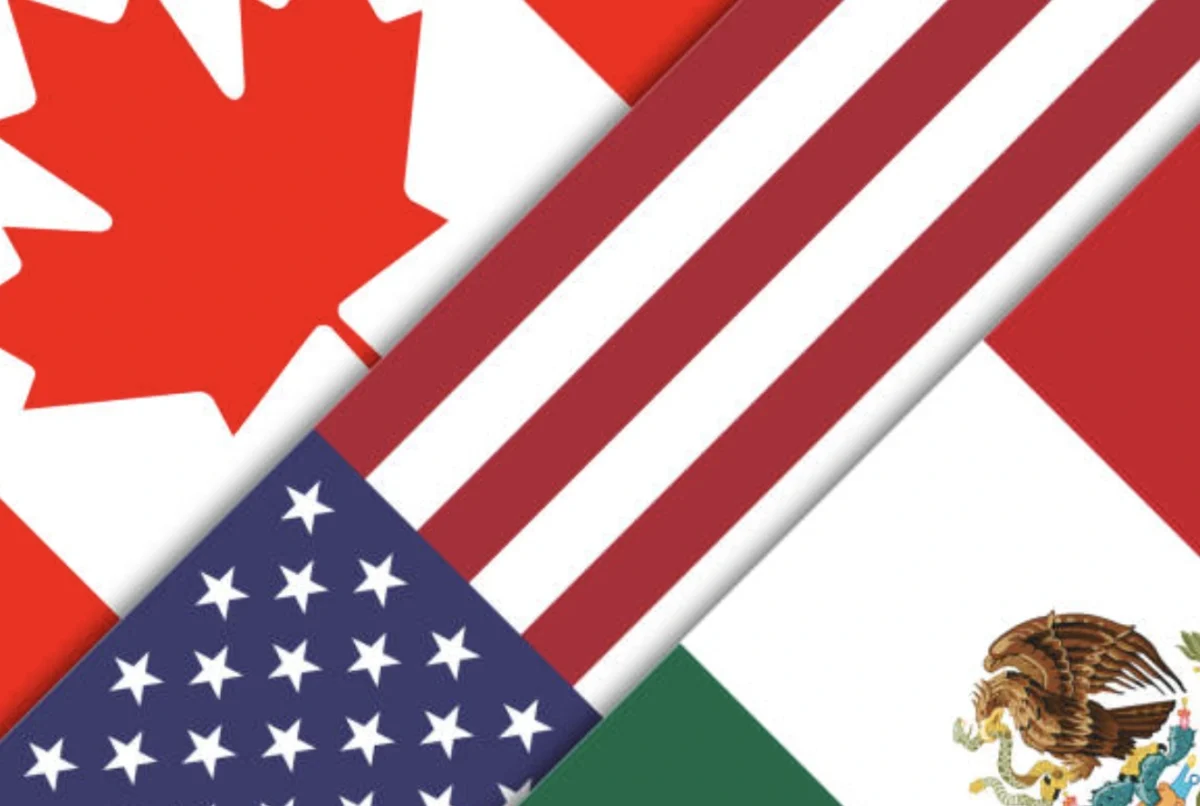
For months, the smart money in Washington was betting on fireworks. Trade lawyers, corporate lobbyists, and policymakers across three countries had spent the better part of a year bracing for a bruising confrontation over the future of the USMCA — the trade pact binding the United States, Canada, and Mexico. Instead, the deadline arrived, and almost nothing happened.
That quiet outcome is, in its own way, a bigger story than the fight everyone expected. Here’s why the clash never materialized — and why that calm may be more fragile than it looks.
What Everyone Expected to Happen
The USMCA includes a built-in review mechanism: six years after the deal took effect, the three member countries were required to decide whether to renew it for another 16-year term. That deadline landed on July 1, 2026, and for much of the year leading up to it, expectations were grim.
President Trump had grown visibly cooler on an agreement he once championed as one of his signature first-term achievements. In the run-up to the deadline, he publicly questioned whether he’d renew it at all, telling reporters at one point that the U.S. didn’t need anything Canada or Mexico had to offer — while suggesting they needed what the U.S. had. That kind of rhetoric, combined with rising trade tensions and existing tariffs on steel, aluminum, autos, and lumber, led many observers to expect Washington might use the renewal window to force a confrontation with its two neighbors, or even float the possibility of withdrawing from the deal altogether.
What Actually Happened Instead
When the deadline hit, the U.S. didn’t renew the agreement outright — but it also didn’t blow it up. Instead, the Trump administration opted for a middle path: declining to extend USMCA for a fresh 16-year term, while allowing it to continue under a new mechanism involving annual reviews over the next decade. The agreement remains legally in force while the three countries continue working through unresolved issues.
Rather than the anticipated blowup, the actual diplomatic moment was notably subdued. A virtual meeting between the three countries on July 1 — once seen as a likely flashpoint — passed without real drama. The U.S. has since opened formal talks with Mexico and remains in contact with Canadian officials, and by most accounts, negotiations are proceeding in a fairly businesslike way, without the political theater many had braced for.
Canadian Prime Minister Mark Carney has struck a measured public tone, saying he won’t rush into signing a bad agreement, but is ready to make a deal if the right terms come together. Canada’s trade minister, meanwhile, has framed the immediate priority as “substantive discussions” over existing U.S. tariffs on Canadian steel, aluminum, autos, and lumber — practical, technical negotiating language, not the kind of rhetoric that suggests an imminent rupture.
So Why Didn’t the Fight Happen?
The most immediate explanation offered by trade watchers comes down to bandwidth, not goodwill. Washington’s attention has been consumed elsewhere — specifically by an escalating conflict involving Iran, which has absorbed an enormous share of the White House’s political focus and foreign policy energy in recent months.
As one veteran diplomat close to the region put it, deliberately picking a fight over North American trade at this exact moment would effectively be a self-inflicted wound — comparing it, in World Cup terms, to a costly own goal. With three World Cup host nations literally being the United States, Canada, and Mexico this year, the metaphor lands with a bit of extra bite: injecting instability into North America’s shared economic framework right now would work against the very cooperative spirit the moment seems to call for.
There’s an old political axiom that captures the dynamic well: events, far more than strategy, often determine what governments actually do. A trade fight that looked highly likely at the start of the year simply got crowded out by a bigger, more urgent crisis — and in the process, the USMCA quietly slipped out of the spotlight it had been expected to dominate this summer.
The Deeper Economic Reasons for Restraint
Geopolitical distraction is only part of the story. There are also structural, economic reasons why picking a major fight over USMCA right now would be unusually costly for Washington.
Supply chains are already deeply intertwined. Years of tension with China have accelerated a broader shift toward “nearshoring” — moving manufacturing closer to the U.S. rather than relying on Chinese production. That shift has made Mexican manufacturing facilities increasingly important to American automotive and technology companies, raising the cost of any disruption to the trade relationship.
The auto industry has been vocal about the stakes. Vehicle production across North America depends on parts crossing the U.S., Canadian, and Mexican borders multiple times before a car is finished. Industry groups have warned that any serious breakdown in that cross-border integration could meaningfully raise the price of new vehicles, parts, and repairs for American consumers — a politically unappealing outcome heading into a midterm election cycle.
Energy trade adds another layer of dependence. Canada remains one of the largest suppliers of energy to the U.S., and instability in Middle Eastern oil markets tied to the Iran conflict has arguably made a stable, unimpeded energy relationship with Canada more strategically valuable, not less.
Taken together, these pressures gave the administration strong practical incentives to avoid rocking the boat, even independent of whatever was happening with Iran.
Not Over — Just Postponed
None of this means the underlying tension driving expectations of a fight has actually disappeared. The shift to an annual review process, rather than a clean multi-year renewal, means USMCA’s future will now be revisited repeatedly over the next decade rather than settled once. Each of those reviews is a fresh opportunity for exactly the kind of confrontation that didn’t happen this time around.
There’s also a more dramatic possibility still on the table, even if it wasn’t triggered this cycle: USMCA allows any member country to withdraw entirely with six months’ notice. Whether a U.S. president can exercise that option unilaterally, without congressional approval, remains a legally unsettled question — one that would likely end up in extended litigation, possibly reaching the Supreme Court, if it were ever actually attempted.
Trade analysts who’ve studied the pattern point out that this isn’t the first time an aggressive U.S. posture toward Canada and Mexico has cooled into something more restrained once the practical costs became clear. A similar dynamic played out in 2018, when a threatened investigation into auto tariffs rattled both countries but was ultimately never acted upon. The pattern suggests that tough public rhetoric and actual policy outcomes don’t always move in lockstep — especially once industry lobbying, market consequences, and competing priorities enter the picture.
The Bottom Line
The fight everyone expected over USMCA’s future didn’t happen — not because the underlying disagreements were resolved, but because a bigger crisis absorbed Washington’s attention at exactly the moment tensions were supposed to peak, while economic self-interest on all sides quietly reinforced the case for restraint. The agreement now heads into a decade of annual reviews rather than a settled long-term renewal, meaning the calm currently surrounding North American trade is better understood as a pause than a resolution. Whether that pause holds may depend less on trade policy itself than on whatever the next major distraction turns out to be.