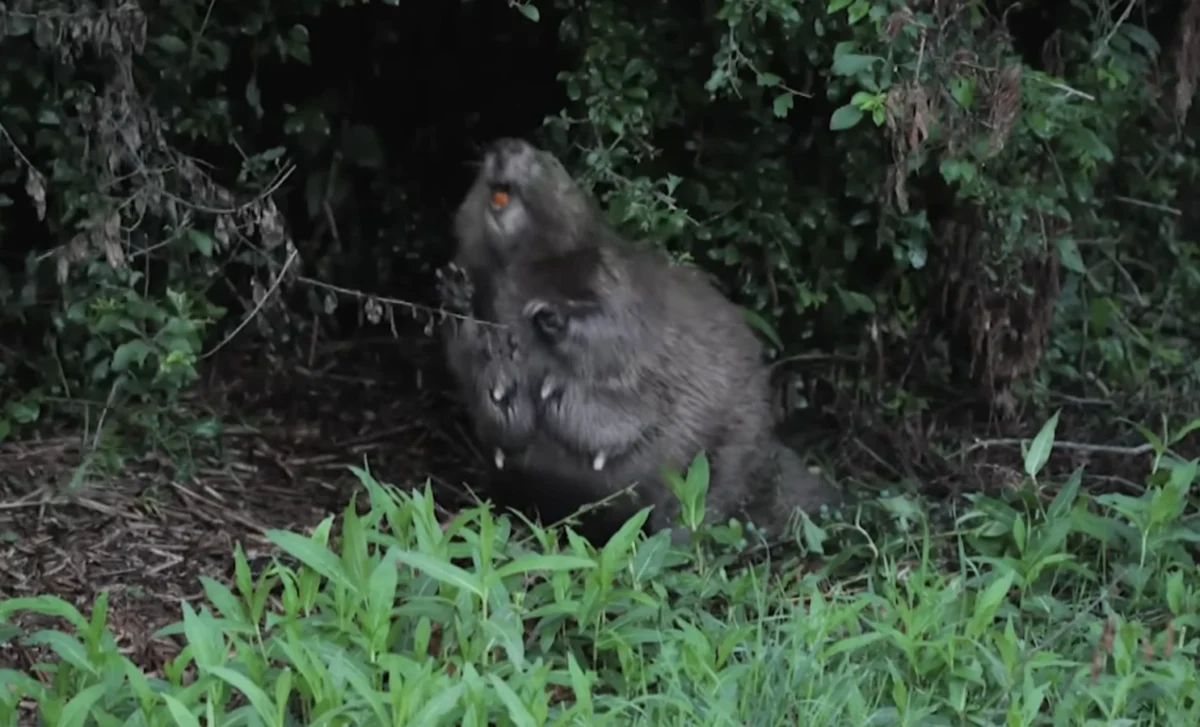
A few hundred feet from a McDonald’s and a budget clothing store, sandwiched between two busy and polluted roads in West London, an unusual group of city residents has been quietly transforming a forgotten patch of land into a lush, thriving wetland. They have no construction permits, no engineering degrees, and no payroll. They are, in fact, beavers — and they have done something London’s own flood engineers had been struggling to solve for years.
This corner of Ealing, a borough in West London, used to flood regularly during heavy rainstorms, with water sweeping into local streets and routinely inundating the nearby Greenford Underground station. Today, thanks to a family of reintroduced beavers, that flooding has stopped. The story has captured international attention — covered by CNN, NPR, the BBC, and CBC within the same week in June 2026 — not just because it’s a charming wildlife tale, but because it represents a genuinely working example of nature-based climate adaptation in one of the world’s largest and most congested cities.
Meet Willow: London’s Flood-Fighting Matriarch
At the center of this story is Willow, the matriarch of a beaver colony living at a site called Paradise Fields in Ealing. Willow is a nursing mother and, notably, the heaviest beaver ever transported and released in the UK — she weighed 30 kilograms (about 66 pounds) at the time of her relocation, and has likely gained weight since settling into her new territory.
Willow was one of five beavers moved from Scotland to this West London site in 2023, in a project located less than 10 kilometers from Heathrow Airport — about as far from a remote wilderness setting as a beaver reintroduction project can get. She is now believed to have produced more than four kits over the years, including two playfully named Chewy and Chompy by project staff, with the exact number born this year still uncertain.
For visitors lucky enough to catch a glimpse of her during one of the project’s organized “beaver safaris,” Willow’s appearance alone makes an impression — including her iron-enriched, distinctively orange teeth, a natural feature of beaver dentition that helps make their teeth strong enough to gnaw continuously through wood.
The Problem: A Tube Station That Kept Flooding
To understand why this story matters, it helps to understand the specific infrastructure problem Ealing was facing before the beavers arrived.
Greenford Underground station sits on aboveground train tracks in West London, and for years, the ticket office and surrounding area flooded whenever the region experienced heavy rainfall. This was not a rare, one-off inconvenience — it was a recurring, predictable problem that local authorities had to plan around, and one that had persisted for roughly a decade according to those familiar with the site’s history.
The local council had already begun planning expensive, complex engineering works to address the flooding through conventional infrastructure solutions — the kind of grey infrastructure projects (concrete drainage channels, pumping stations, flood barriers) that cities typically turn to when faced with this kind of recurring water management problem.
Before those engineering works moved forward, several community groups proposed something radically different: leave it to the beavers.
How Beaver Dams Actually Prevent Flooding
The science behind the beavers’ impact is straightforward once you understand beaver behavior, even though the results can look almost too good to be true.
Beavers build dams instinctively, using branches, mud, and vegetation, because dams create the deep, still ponds that beavers need to feel safe from predators and to access enough water to swim in comfortably. This is not behavior trained or directed by humans in any way — it is simply what beavers do whenever they are given access to a flowing water source.
The site chosen for the project, a 24-acre stretch of land called Paradise Fields, had been a largely forgotten and neglected space before the beavers arrived. Within months of their release at the end of 2023, the beaver family had built several dams across the site, holding back significant volumes of water inside Paradise Fields and dramatically slowing its movement downstream.
The cumulative effect transformed the landscape into something close to a giant sponge. During heavy rainfall, rather than water rushing unimpeded downstream toward Greenford station and the surrounding streets, the beaver dams now capture and hold much of that water within Paradise Fields itself, releasing it slowly over time rather than all at once. Everything downstream — including the previously flood-prone tube station — is now significantly more protected than before the beavers arrived.
As one project description put it plainly: the dams themselves are messy by conventional engineering standards, but the ponds they create store water and substantially limit flooding — proving, in this case, that messy and effective are not mutually exclusive.
Why This Worked Better Than Expected
What makes the Ealing case particularly significant is that it wasn’t an isolated experiment — it built on an earlier, smaller-scale UK trial. In March 2022, the council in Enfield, another district in North London, released a pair of beavers into a large managed enclosure, marking the first time beavers had lived in the British capital in roughly 400 years. That project was explicitly designed as a practical test of urban natural flood management, and it worked: the beavers built dams and raised water levels inside their enclosure, creating a flooding buffer, while also successfully reproducing and thriving in an urban setting.
The Ealing Beaver Project pushed that initial proof of concept significantly further, describing itself as the UK’s first fully urban beaver enclosure of this scale and ambition.
A Bonus Nobody Fully Expected: Biodiversity Is Booming Too
While flood prevention was the primary motivation behind the project, the beavers’ presence has triggered a cascade of additional ecological benefits that project staff did not necessarily anticipate at the outset.
Chenz Mustafa, who holds the role of urban beaver officer — a newly created position specifically designed to engage and educate the public about the colony — reports that biodiversity across the site has measurably improved since the beavers moved in. The site is now home to more fish and a greater variety of bird species than before the beavers arrived, a direct consequence of the wetland habitat the beavers have engineered through their dam-building.
This pattern is consistent with what ecologists have observed in beaver reintroduction projects elsewhere: by creating standing water, slowing water flow, and opening up dense vegetation through selective tree-felling, beavers function as what conservationists often call a “keystone species” — an organism whose activity disproportionately shapes and enriches the entire surrounding ecosystem, creating habitat conditions that benefit a wide range of other species that would not otherwise thrive in the same space.
There are already early plans to use the improved habitat conditions at Paradise Fields to support the reintroduction of water voles, a species now considered locally extinct in the area, once conditions are judged suitable.
A 400-Year Homecoming
The presence of beavers in London carries historical weight that goes beyond their immediate flood-control function. Wild beavers disappeared from the UK entirely roughly 400 years ago, hunted to extinction for their fur, their meat, and their musk — a musky, vanilla-like secretion from their scent glands that was historically prized both as a food flavoring and as an ingredient in perfumes.
The Ealing Beaver Project, alongside the earlier Enfield trial, represents the return of a species to London that had been entirely absent from the capital for longer than the United States has existed as a country. The species involved is specifically the Eurasian beaver, which is distinct from the North American beaver species more commonly seen in Canadian and US wildlife documentaries — a detail the project’s guides make a point of explaining to visitors who may assume all beavers are the same species.
Part of a Much Bigger Plan to Rewild London
The Ealing project did not emerge in isolation. It is one component of a deliberate, city-wide rewilding strategy championed by London Mayor Sadiq Khan, who has made rewilding an explicit policy priority for the capital.
In 2021, Khan launched the Rewild London Fund, which has since provided more than £2.48 million (approximately $4.5 million) in funding to dozens of projects across the city aimed at creating and restoring natural habitat. Recipients have included not just the Ealing beaver reintroduction, but also projects supporting bees in Bexley and bats in Barnes — part of a broader effort to weave biodiversity back into one of the world’s most densely built urban environments.
For Khan, the rewilding push carries a social dimension as well as an environmental one. He has explicitly framed expanding access to nature in London as a matter of social justice, noting that many Londoners do not have access to a private garden and therefore rely entirely on public green spaces for any meaningful connection to nature. Mayor’s office officials have separately praised the beavers’ impact, calling it “fantastic” to see the colony thriving and noting it is “incredible” that in just a few short years the project has potentially stopped flooding at a local station, transformed Paradise Fields into a flourishing wetland, and improved biodiversity across the area.
The project was delivered through a partnership between Citizen Zoo, the Ealing Wildlife Group, Ealing Council, and the Friends of Horsenden Hill, with Dr. Sean McCormack — a veterinarian and chair of the Ealing Wildlife Group — serving as project lead. Elliot Newton, co-founder of Citizen Zoo, has described the project’s ambition as challenging public perceptions about what is genuinely possible for wildlife reintroduction within urban settings.
Can You Visit the London Beavers?
Yes — and demand to do so has grown substantially since the project gained wider public attention. The Ealing Beaver Project runs publicly accessible “beaver safaris” several times a week, and these sessions frequently sell out in advance.
Visitors join small guided groups that move quietly through the site at dawn or dusk — the hours when beavers are naturally most active, since they sleep through much of the day and work primarily during low-light periods. Guides explain the history of the project, the ecology of the site, and the specific signs of beaver activity visible throughout Paradise Fields: gnawed tree trunks, channels cut through vegetation, dam structures, and the pooled water the dams create.
Some visitors are drawn to the site after watching wildlife documentaries — the BBC’s David Attenborough-narrated series “Wild London” has been cited by several visitors as their introduction to the project. Others are simply local residents curious about the unexpected wetland that has appeared in their neighbourhood. One visitor, reflecting on the site’s incongruous location next to a McDonald’s and a TK Maxx, remarked that the contrast between the everyday retail landscape and the immersive wetland habitat just beyond it is part of what makes the project feel so remarkable.
For a visitor from Canada — a country where beaver sightings are comparatively unremarkable — seeing a beaver this closely, and for this length of time, at a site in West London was, by her own account, the closest wildlife encounter with the species she had ever experienced, beaver homeland or not.
What Comes Next: Expansion Across London
The success at Ealing has generated momentum for further expansion. A new beaver project is already in development for South London, even as the original Ealing colony — now believed to include at least eight beavers — continues to grow. Separately, there are proposals to release beavers in Croydon, also in South London, extending the urban rewilding model to additional parts of the capital.
This pattern is not unique to London. Beavers have been reintroduced at various sites across England in recent years, including locations in Somerset and Cornwall. In 2026, a family of beavers was released into two sites across the historic Holnicote Estate on Exmoor. Scotland has maintained wild, free-living beaver populations since sightings as early as the 2000s, with further planned releases at the Glen Affric Nature Reserve and the River Beauly. Wales has expressed clear interest in following suit, while Northern Ireland — where beavers were likely never historically native — has not yet pursued similar reintroduction efforts.
A Word of Caution from Experts
Despite the clear success at Ealing, conservation experts are careful to note that beaver reintroduction is not a universal, risk-free solution that can simply be deployed anywhere flooding occurs.
Beaver activity fundamentally reshapes the landscape it occupies — felling trees, redirecting water flow, and creating new wetland habitat where dry land previously existed. In carefully managed and monitored settings like Paradise Fields, those changes have been overwhelmingly positive. But experts caution that reintroductions elsewhere need careful site selection, ongoing monitoring, and a clear management plan, particularly in agricultural areas or locations where beaver dam-building could create unintended consequences for existing land use, drainage systems, or property.
The broader lesson from Ealing is not that beavers should be released indiscriminately wherever flooding occurs, but that nature-based solutions — engineered by the species that evolved specifically to do this work — deserve serious consideration alongside, or even instead of, costly conventional infrastructure, when conditions are right and the reintroduction is properly planned and managed.
Key Facts: The Ealing Beaver Project at a Glance
| Detail | Information |
|---|---|
| Location | Paradise Fields, Ealing, West London |
| Site Size | 24 acres |
| Beavers Released | 5 (relocated from Scotland), late 2023 |
| Current Population | At least 8 beavers |
| Species | Eurasian beaver |
| Distance from Heathrow Airport | Less than 10 kilometers |
| Tube Station Affected | Greenford Underground Station |
| Flooding Status | Has stopped since beaver dam-building began |
| Project Partners | Citizen Zoo, Ealing Wildlife Group, Ealing Council, Friends of Horsenden Hill |
| Project Lead | Dr. Sean McCormack |
| Years Beavers Absent from UK | ~400 years |
| First London Beaver Project | Enfield, March 2022 |
| Funding Source | London’s Rewild London Fund (£2.48 million across multiple projects) |
| Public Access | Guided “beaver safaris,” several times weekly |
| Planned Expansion | New project in South London; proposals for Croydon |