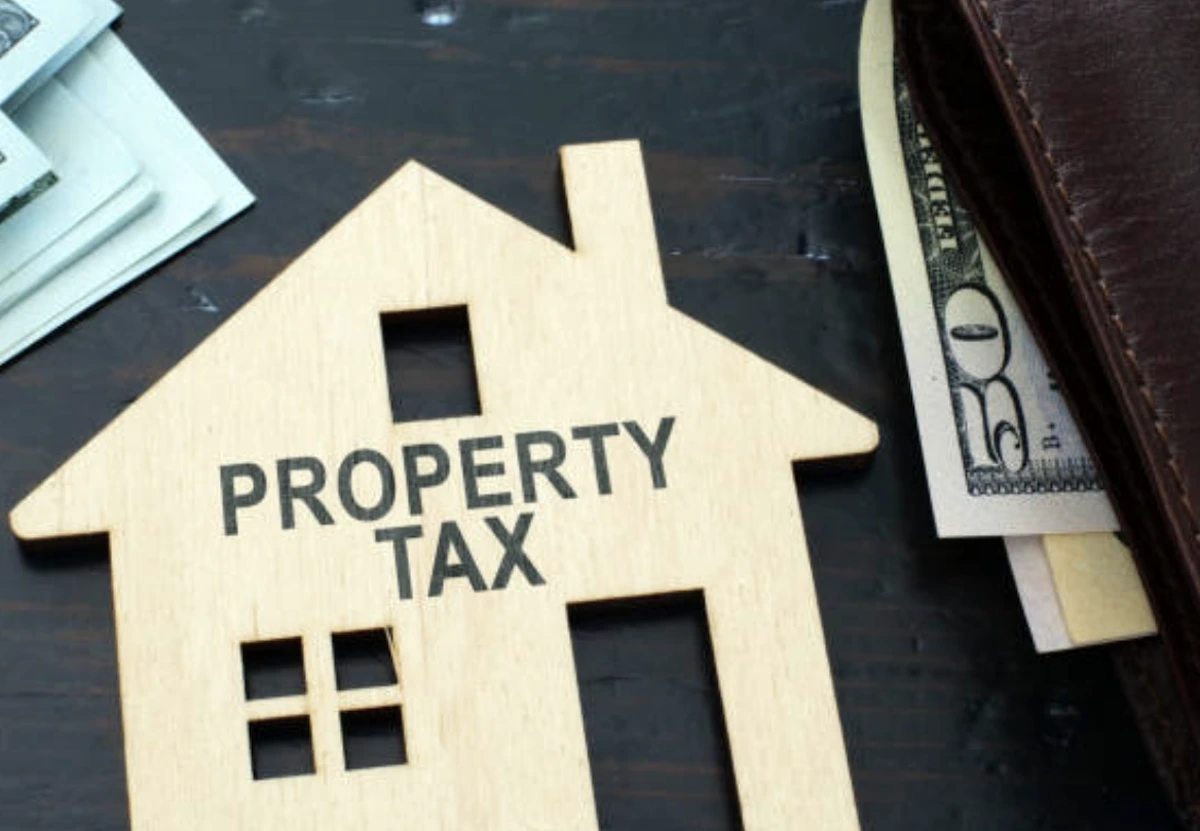
In the bedroom community of Oviedo, just outside Orlando, the police department has spent a decade trying to replace a 36-year-old station with leaking windows and not enough space for its growing K-9 unit. The city finalized plans for an $18 million replacement facility. And now, that plan may never happen — not because of construction delays or budget overruns, but because Oviedo may not have a police department to house in a few years.
The reason is a single ballot measure that Florida voters will decide on this November: a constitutional amendment that could fundamentally restructure how local governments across the state are funded. Understanding what this amendment actually does — separate from the political rhetoric on both sides — has become essential for every Florida homeowner, renter, and local government official watching the lead-up to the vote.
What Is the Florida Property Tax Amendment, Exactly?
On June 2, 2026, the Florida Legislature passed HJR 1F, formally titled the “Save Our Homes from Excessive Property Taxes” amendment, during a special legislative session called by Governor Ron DeSantis. The measure cleared the House by a vote of 75–26 and the Senate by 30–9, sending it to the November 3, 2026 general election ballot, where it requires approval from at least 60% of Florida voters to take effect.
It is important to be precise about what has and has not happened so far. As of this writing, Florida property taxes remain entirely unchanged. The Legislature has placed a proposed constitutional amendment on the ballot — it has not enacted any tax change itself. Nothing about a Florida homeowner’s current tax bill is different today than it was before the special session. The amendment becomes operative only if Florida voters approve it in November, and even then, the changes are phased in beginning January 1, 2027.
The Three Core Provisions
If approved, HJR 1F would make three significant changes to Florida’s property tax structure:
1. A dramatically expanded homestead exemption. Currently, Florida homeowners using a property as their primary residence receive two exemptions: the first $25,000 of assessed value is exempt from all property taxes including school taxes, and an additional $25,000 is exempt from non-school taxes only. Under HJR 1F, the non-school homestead exemption would rise substantially — to $150,000 beginning January 1, 2027, and to $250,000 beginning January 1, 2028, with automatic inflation adjustments in subsequent years. Critically, this expanded exemption does not apply to school district property taxes, meaning public school funding is explicitly shielded from this particular change.
2. A reduced assessment cap for non-homestead properties. Florida currently caps annual assessment increases for non-homestead properties — including rental buildings, vacation homes, and commercial properties — at 10% per year. HJR 1F would cut that cap to 5% per year, slowing how quickly the taxable value of these properties can rise even as market values increase faster.
3. A legislative mandate to study full elimination. Beyond the immediate exemption increases, the amendment directs the Legislature to develop, through future general law, a procedure and schedule for potentially eliminating non-school homestead property taxes entirely. This provision does not eliminate property taxes outright — it commits the state to a future legislative process aimed at that eventual goal, with specifics still to be determined.
There is also a new residency requirement built into the amendment: starting after January 1, 2027, first-time homeowners would need to demonstrate five years of residency to qualify for the expanded “super exemption,” a provision intended to prevent the benefit from immediately applying to brand-new homeowners.
What the Amendment Does Not Do
Despite widespread online discussion suggesting Florida has already eliminated property taxes, that is not accurate. The amendment does not abolish property taxes. It does not affect school district taxes at all. And critically, it requires cities and counties to direct remaining property tax revenue toward specific priority categories — including public safety (law enforcement, fire service, and emergency medical services) and public education — adding a layer of spending mandate even as the available revenue itself shrinks.
It is also worth noting that Governor DeSantis had initially asked the Legislature to pursue a broader measure that would eventually abolish all property taxes statewide. Lawmakers instead passed this narrower homestead-focused version, which still represents one of the most significant property tax changes in Florida’s history but stops short of DeSantis’s original, more sweeping proposal.
Why Oviedo’s Mayor Is Sounding the Alarm
Oviedo Mayor Megan Sladek’s warning about her city’s police department is not rhetorical exaggeration — it reflects the structural reality of how Florida’s local governments are funded.
Florida has no state personal income tax, which means municipalities rely overwhelmingly on property and sales taxes to fund essential services. Property taxes, in particular, provide budget stability that sales tax revenue — which fluctuates with consumer spending — cannot match. For Oviedo specifically, property taxes generate roughly half of the city’s total revenue, funding its police, fire, and parks departments.
If the amendment passes and Oviedo’s tax base shrinks as a result, Sladek has said the city would likely be forced to dissolve its police department once existing savings are exhausted — within roughly a year by her estimate — and hand policing responsibilities over to Seminole County instead.
“What kind of fools would we be to invest in a police station when we don’t know whether we can afford to operate a police department?” Sladek said, explaining why the city’s long-planned $18 million replacement station is now effectively on hold pending the November vote.
The Numbers: What This Could Cost Florida’s Local Governments
The fiscal scale of HJR 1F’s potential impact is significant. The Florida Association of Counties estimates that counties statewide would lose approximately $3.6 billion in revenue in 2027 and $6.4 billion in 2028 if the amendment passes — figures that reflect the two-stage phase-in of the expanded exemption.
Crucially, the amendment as passed does not include any dedicated backstop funding mechanism to offset these losses for local governments. DeSantis had separately proposed a state trust fund that would provide grants to help local governments absorb the impact, but no such provision made it into the version actually placed on the ballot.
The impact will not be distributed evenly across the state. Wealthier, coastal jurisdictions — places like Palm Beach and Miami-Dade — have meaningful flexibility to offset lost homestead revenue by raising taxes on luxury second homes, vacation rentals, and a robust commercial tax base. Inland and rural counties face a starkly different reality: many simply do not have a significant number of properties valued above $250,000, nor a substantial commercial tax base to lean on instead.
This disparity is already visible in Florida’s existing fiscal landscape. Nearly half of Florida’s 67 counties are currently designated as “fiscally constrained,” a formal status that makes them eligible for additional state funding to help level up their tax collection capacity relative to their needs. As Mayor Sladek put it: “Now they’re making everybody fiscally constrained. Where’s the phantom money coming from?”
The Political Backdrop: A National Property Tax Revolt
Florida’s amendment is not happening in isolation. It is the most prominent example of what tax policy analysts are calling the largest property tax backlash in America since the 1970s.
Jared Walczak, a senior fellow at the right-leaning Tax Foundation, has described the current moment as “a new property tax revolt.” The driving force behind it is straightforward: real estate values have risen roughly 27% faster than inflation since 2020, and that surge has translated directly into sharply higher property tax bills for millions of homeowners, even when their income has not grown at anything close to that pace.
According to the National Association of Counties, 34 states passed property tax reforms between 2020 and 2025. Ohio, Indiana, and Wyoming all passed property tax cuts in the past year. In Texas, Governor Greg Abbott has proposed eliminating the school property tax for homeowners entirely, using the state’s budget surplus to backfill the resulting funding gap. Citizen-led signature campaigns in North Dakota and Ohio have sought to place measures abolishing property taxes altogether directly before voters.
Notably, this movement has been led primarily by the populist wing of the political right, which represents something of a break from traditional fiscal conservative orthodoxy. Historically, many conservatives favored property taxes specifically because they are closely tied to local government accountability and decision-making — a “you get what you pay for, locally” logic that the current revolt has largely abandoned in favor of direct, immediate tax relief.
The push also extends beyond strictly partisan lines. Tax relief efforts aimed at seniors, tipped workers, and lower-income households have found support across the political spectrum as part of a broader response to cost-of-living pressures — suggesting the property tax debate is part of a wider conversation about affordability that transcends traditional left-right divisions.
A Familiar Pattern: Echoes of California’s Proposition 13
Florida’s current property tax fight closely echoes a defining moment in American tax policy history: California’s Proposition 13.
In 1978, California voters — angry over runaway inflation and rapidly rising property values eroding their household budgets — passed Proposition 13, which capped annual property tax increases statewide at no more than 2% per year. The measure became one of the most consequential tax policy decisions in modern American history, fundamentally reshaping how California funds local government and triggering a nationwide tax revolt that influenced property tax policy across the country for decades afterward.
David Schleicher, a professor of property and urban law at Yale University, explains why property taxes generate this particular kind of political anger. “It’s a tax that is easy to demonize, even though it has this long-running American history,” he says. The psychological mechanism, in his framing, is that homeowners do not feel the appreciation in their home’s value as accessible wealth in their day-to-day finances — but they are still required to pay higher taxes calculated against that paper increase in value, creating a sense of being taxed on money they have not actually received.
The Long-Term Effect: Favoring Long-Term Owners Over New Buyers and Renters
One of the most significant and lasting structural effects of Proposition 13-style assessment caps — a pattern Florida’s existing system already partially reflects, and which HJR 1F would extend — is that they tend to systematically favor long-term homeowners over recent buyers and renters.
Because assessment caps limit how quickly a property’s taxable value can rise even as market value increases, longtime owners can end up paying property taxes calculated against a value far below their home’s actual current worth. New buyers purchasing a comparable or even identical home, by contrast, face a tax bill calculated against full current market value from day one.
Mayor Sladek illustrated this dynamic from personal experience: “I can live in the exact same house as my neighbor, but because I’ve lived here for 20 years that person is paying four or five times as much in taxes as I am for the same services.” This dynamic — already present in Florida’s existing system through its Save Our Homes assessment cap enacted via the 1992 constitutional amendment — would become even more pronounced under HJR 1F’s expanded homestead exemption.
Who Supports the Amendment, and Why
Supporters of HJR 1F frame the measure as a long-overdue correction to a tax burden that has grown unsustainably fast for ordinary homeowners. Florida property tax levies have increased by more than 40% over the past three years — a rate of growth that has significantly outpaced both population growth and general inflation.
Hector Roos, chair of the Libertarian Party of Miami-Dade County, has been a vocal advocate, framing the issue in terms of fundamental property rights. “People should not be permanent renters to the government,” he said, expressing hope that the amendment represents an initial step toward eventually eliminating property taxes in Florida altogether.
Senate President Ben Albritton, a key sponsor, has tied the measure explicitly to broader American ideals around homeownership, describing it as a fitting way to mark the nation’s 250th anniversary with what he characterized as a substantial and straightforward tax cut for Florida homeowners.
The Practical Stakes for November
Passing this amendment will not be simple, regardless of how popular the underlying sentiment may be. Florida’s constitution requires a 60% supermajority for constitutional amendments — a remarkably high bar. For context, no presidential candidate has ever achieved 60% of the vote in Florida in the modern era, and a high-profile 2024 abortion rights ballot measure that received majority support still fell short of the 60% threshold and failed. Polling on property tax relief generally shows broad, bipartisan support, which gives the amendment a more realistic path to that threshold than many other ballot measures — but the bar remains genuinely difficult to clear.
For Florida’s local governments, the months between now and November represent a period of genuine uncertainty. Capital projects like Oviedo’s planned police station, multi-year infrastructure commitments, and long-term staffing decisions are all being made — or deliberately paused — against the backdrop of a funding structure that could look dramatically different beginning in 2027.
As Mayor Sladek summarized the broader risk facing Florida’s patchwork of cities and counties: “It would just be this crazy domino effect of messed up, unintended consequences.” Whether that assessment proves accurate, or whether the amendment delivers the affordability relief its supporters promise without the disruption its critics fear, will not be known until well after votes are counted in November — and, in truth, likely not until the phased provisions actually take effect in the years that follow.
Key Facts: Florida’s Property Tax Amendment at a Glance
| Detail | Information |
|---|---|
| Official Name | HJR 1F, “Save Our Homes from Excessive Property Taxes” |
| Passed Legislature | June 2, 2026 (House 75–26, Senate 30–9) |
| Election Date | November 3, 2026 |
| Approval Threshold | 60% of Florida voters |
| Current Status | No changes yet; existing taxes unchanged until/unless approved |
| Homestead Exemption (2027) | Rises to $150,000 (non-school taxes) |
| Homestead Exemption (2028) | Rises to $250,000, then inflation-adjusted annually |
| School Taxes | Not affected by the expanded exemption |
| Non-Homestead Assessment Cap | Reduced from 10% to 5% annually |
| New Residency Requirement | 5 years for first-time homeowners (effective after Jan. 1, 2027) |
| State Backstop Funding | Proposed by DeSantis; not included in final ballot measure |
| Estimated County Revenue Loss | $3.6B (2027), $6.4B (2028), per Florida Association of Counties |
| Counties Already “Fiscally Constrained” | Nearly half of Florida’s 67 counties |
| Historical Parallel | California’s Proposition 13 (1978) |