The global food system has a structural problem that few consumers think about every time they sit down to eat: agriculture and the broader food supply chain are responsible for nearly a third of total global greenhouse gas emissions, with farms themselves accounting for almost half of that share. At the same time, farming is one of the economic sectors most exposed to the consequences of climate change, with rising temperatures threatening to devastate crop yields in growing regions around the world.
That double bind — agriculture as both a major emissions source and a major climate casualty — is driving a fast-growing experiment in how the world’s largest food and beverage companies pay for the food they sell. Rather than simply purchasing crops at market price, companies including Nestlé, Unilever, PepsiCo, Carlsberg, and Diageo are now directing meaningful capital toward paying farmers to change how they farm — specifically, to adopt regenerative agriculture practices designed to rebuild soil health and lock carbon back into the ground.
“It’s never been so apparent that our food system needs fixing,” says Chuck de Liedekerke, CEO and co-founder of Soil Capital, a Belgian company at the center of this emerging market. Soil Capital pays farmers directly for verified improvements in soil carbon and soil health, and its recent multi-year partnership with Nestlé has become one of the most closely watched examples of how this model operates at scale.
What Is Regenerative Agriculture, Exactly?
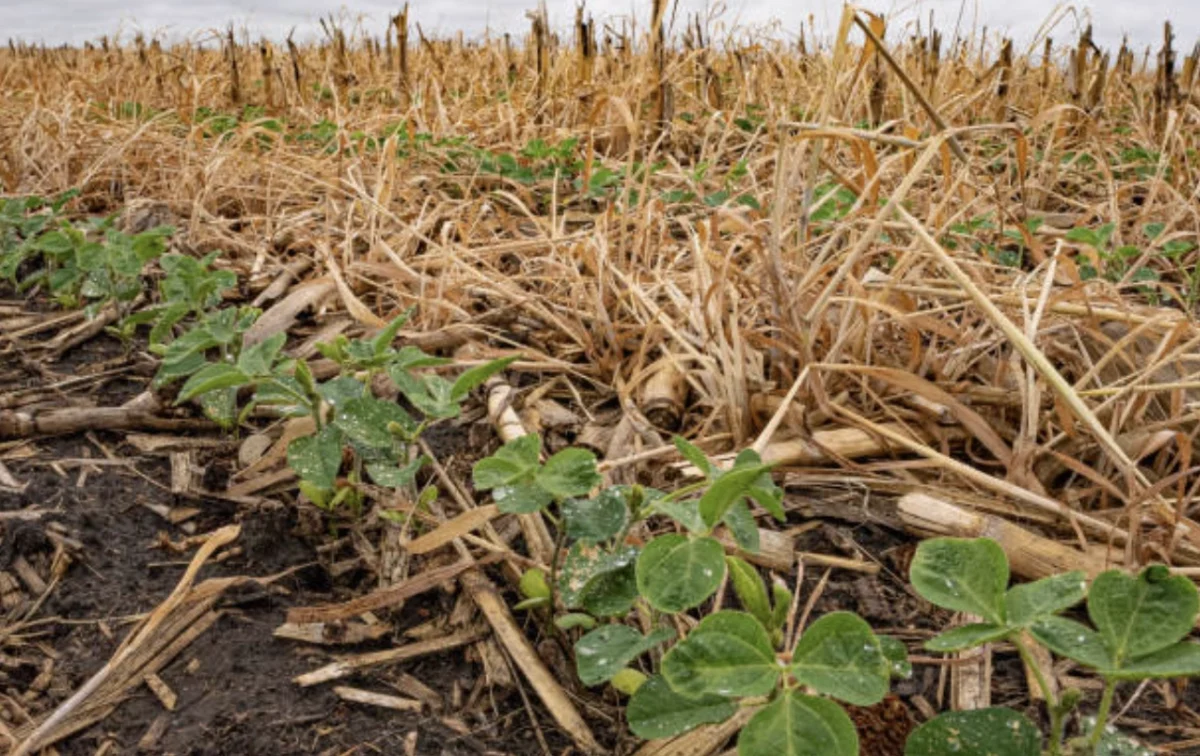
Regenerative agriculture is an approach to farming that prioritizes restoring and building soil health, rather than simply extracting maximum yield from land season after season. The underlying premise is that centuries of conventional farming — particularly intensive tilling, heavy machinery use, and reliance on chemical fertilizers — have steadily depleted the natural fertility of agricultural soils worldwide.
“For centuries now, we’ve actually been depleting the natural fertility of our soils,” de Liedekerke explains. “If you can invest, through regenerative practices, in the fertility of those soils, then you can make your whole system more resilient.”
In practical terms, farmers participating in regenerative programmes commit to a defined set of changes to how they manage their land:
- Reducing soil disturbance, primarily by minimising or eliminating tillage, the mechanical turning of soil that has long been standard practice in conventional farming
- Reducing reliance on chemical fertilizers, shifting toward biological and organic alternatives where possible
- Increasing plant diversity, moving away from monoculture cropping patterns toward more varied rotations
- Planting cover crops during the gaps between primary cash crop growing seasons, keeping soil covered and biologically active year-round rather than left bare
- Planting trees and other permanent vegetation on farmland, an approach known as agroforestry that integrates woody plants directly into agricultural systems
Why Soil Carbon Matters
The scientific logic behind these practices centers on soil’s capacity to store carbon. Plants absorb carbon dioxide from the atmosphere and, through their root systems and the broader soil ecosystem, a portion of that carbon can become locked away in the soil itself rather than cycling back into the atmosphere.
De Liedekerke describes soil carbon as “one of the biggest drivers of fertility” — carbon-rich soil tends to retain more water, which in turn makes crops more resilient to drought conditions. The challenge is that this stored carbon is not stable under all farming conditions. When fields are worked intensively with heavy machinery, particularly through repeated tilling, the disturbed soil releases stored carbon back into the atmosphere — effectively reversing years of accumulated storage in a single pass of farm equipment.
How the Carbon Certificate Model Actually Works
Soil Capital’s business model illustrates how this emerging market functions in practice, and it differs in an important way from more familiar carbon offset programmes.
Farmers who enrol in Soil Capital’s programme commit to the regenerative practices described above. The company then monitors changes in soil carbon levels on that farmland over time, using a Monitoring, Reporting and Verification system that combines satellite imagery with field-level data collection to track carbon sequestration, broader soil health indicators, and emissions outcomes.
When verified carbon improvements are confirmed, Soil Capital issues certificates corresponding to those improvements. Each certificate represents one metric ton of CO2-equivalent emissions either reduced or removed from the atmosphere. These certificates are then sold to corporate partners, who can apply them toward their own emissions reduction commitments.
Critically, Soil Capital describes these certificates as performance-based rather than speculative: they are generated only after the underlying carbon results have been quantified and independently audited, meaning a farmer’s certificate earnings are tied directly to demonstrated, measurable changes rather than projected or assumed outcomes.
The Economics for Farmers
The certificates themselves trade in a price range of roughly 20 to 60 euros (approximately $23 to $69) per certificate, with farmers receiving 70% of the resulting proceeds. This revenue-sharing structure is central to the model’s design logic.
“What’s holding farmers back from regenerative agriculture is the risk that they’re going to take in a context where they operate with very low margins,” de Liedekerke notes. Farming is, in most markets, a thin-margin business where experimenting with new and uncertain practices carries real financial risk for the farmer if yields decline during a transition period. “A financial incentive is really what’s most important today to get farmers to actually change practices at scale,” he adds.
This focus on direct financial incentive — rather than relying purely on environmental conviction or regulatory mandate — is a defining feature of how this generation of regenerative agriculture programmes is being designed and marketed to farmers.
Why Big Food Is Buying In: The Nestlé Partnership
The clearest illustration of corporate appetite for this model is Nestlé’s multi-year partnership with Soil Capital, announced in April 2026. Nestlé — the world’s largest food and beverage company by revenue — has committed to a four-year agreement supporting farmers across France, Belgium, and the United Kingdom in transitioning to regenerative practices.
The scale of the partnership, while modest relative to Nestlé’s total global sourcing footprint, is structured to be a genuine operational programme rather than a symbolic gesture. Nearly 230 farmers managing more than 13,000 hectares across the three countries will receive tailored agronomic advice alongside access to digital platforms that measure their environmental performance. The programme specifically targets wheat, corn, barley, and sugar beet — core ingredients within Nestlé’s European supply chain.
Nestlé’s broader ambition extends well beyond this initial cohort. The company aims to source 50% of its key ingredients from farmers using regenerative practices by 2030 — a significant target given that, according to Nestlé’s own most recent disclosed figures, ingredient sourcing accounts for over 70% of the company’s total greenhouse gas emissions. For a company of Nestlé’s scale, that sourcing footprint represents the largest single lever available for reducing its overall carbon footprint, larger than its manufacturing operations, packaging, or logistics combined.
“We’re investing in the long-term health of our supply base, strengthening resilience, and focusing on soil,” said Anita Wälz, head of sustainability at Nestlé Europe, at the time of the announcement. In subsequent commentary, Wälz has framed the approach explicitly in supply chain risk terms, emphasising support for farmers through transition rather than simply asking them to absorb risk unassisted.
Nestlé’s regenerative push extends beyond the Soil Capital partnership. The company has reported reaching its 2030 regenerative agriculture target within a specific UK milk supply chain ahead of schedule, and has launched a separate initiative with dairy cooperative First Milk aimed at halving carbon emissions within that supply chain by 2026.
A Broader Industry Movement
Nestlé’s commitment is part of a wider pattern of major food and beverage companies embracing regenerative agriculture as a core supply chain strategy rather than a peripheral sustainability initiative.
In May 2026, drinks companies Carlsberg and Diageo were among 40 organisations that signed a declaration of intent to scale regenerative agriculture across their respective supply chains, coordinated through a programme developed by the Sustainable Agriculture Initiative platform — an industry body focused on advancing sustainable farming practices across the consumer goods sector.
Unilever has set a target of implementing regenerative practices across 1 million hectares (approximately 2.5 million acres) by 2030. PepsiCo has set an even larger target: regenerative practices across 10 million acres of land supporting the cultivation of its ingredients, by the same 2030 deadline.
The market for soil carbon services extends beyond Soil Capital. Denmark’s Agreena describes itself as the largest soil carbon programme in Europe, operating a similar model of paying farmers for verified soil carbon improvements. In the United States, companies such as Grassroots Carbon work specifically with cattle ranchers, applying regenerative grazing practices — including rotational paddock systems using mobile fencing — and selling resulting carbon credits to corporate buyers that include Nestlé, Microsoft, and Chevron.
Banks Are Getting Involved Too
The financial infrastructure supporting regenerative agriculture is also expanding beyond direct carbon payments. Soil Capital has partnered with HSBC in the UK to widen farmer access to the bank’s Sustainable Farming Pathway programme, which provides financing specifically structured to support farmers transitioning to regenerative practices. Farmers enrolled in Soil Capital’s programme are guaranteed acceptance into the HSBC financing scheme and receive improved loan conditions as a result.
According to Soil Capital leadership, this reflects a genuine credit risk assessment rather than a marketing gesture: banks are increasingly recognising that farmers operating regenerative systems tend to have stronger underlying credit profiles, a signal that is beginning to translate into more favourable lending terms.
Industry observers describe this as part of a broader shift in how the market frames the value of regenerative agriculture — moving from a narrow focus on carbon accounting toward a more holistic emphasis on overall supply chain and farm-level resilience.
The Skepticism: Does Regenerative Agriculture Actually Help the Climate?
Not everyone in the climate and agricultural science community is convinced that regenerative agriculture, as currently practised, delivers the climate benefits its proponents claim.
Timothy Searchinger, technical director for agriculture, forestry, and ecosystems at the World Resources Institute, has been a prominent voice of caution. “The idea that you’re going to sequester a lot of carbon in soils on working agricultural land, I think is unlikely,” he says.
Searchinger’s scepticism rests on several specific technical concerns. On cover crops — one of the central practices promoted across regenerative programmes — he acknowledges they “might sequester a little bit of carbon over time,” but notes that cover crops currently occupy less than 4% of US cropland, constrained by real-world adoption barriers including cost and the limited window of time available to establish them before winter arrives in many growing regions.
On reduced or no-till farming, another cornerstone regenerative practice, Searchinger points to ongoing scientific debate over how much soil carbon benefit it genuinely delivers. He notes that in the United States, the majority of farmers practising no-till still plough their fields periodically — typically every few years — which he argues is likely to reverse most of whatever carbon storage benefit accumulated during the no-till period.
His overall assessment is measured rather than dismissive: “They’re good practices, but they don’t do much for the climate,” he says, while acknowledging that regenerative techniques can meaningfully reduce soil erosion and improve both water retention and water quality — genuine agricultural benefits that exist independently of their climate impact.
The Numbers Behind the Debate
The scale of the climate contribution at stake is itself a matter of significant magnitude even under optimistic projections. The Organisation for Economic Co-operation and Development has estimated that net soil carbon sequestration on farmland could offset approximately 4% of annual global human-induced greenhouse gas emissions over the remainder of the century — a meaningful contribution, but one that falls well short of being a primary solution to the broader climate challenge on its own.
This tension — real but modest climate potential, set against ambitious corporate marketing and target-setting — is likely to remain a defining feature of how regenerative agriculture is discussed and scrutinised as the decade progresses.
Beyond Carbon: The Broader Case for Regenerative Agriculture
De Liedekerke and other proponents of regenerative agriculture argue that focusing solely on the climate change angle understates the model’s value. Soil Capital’s monitoring framework tracks indicators of soil health, biodiversity, and water management alongside carbon metrics specifically because, in de Liedekerke’s framing, climate mitigation is not the sole or even primary justification for the approach.
“It’s not just because we want to reduce greenhouse gas levels, it’s because we want to drive that soil fertility,” he says. “If there’s no fertility, there are no farms. If there are no farms, there’s no food.” This framing positions regenerative agriculture less as a climate offset mechanism and more as a long-term food security strategy — a distinction that matters for how the model should ultimately be evaluated and whether its current carbon-market-based financing structure is the right long-term mechanism for scaling it.
This broader framing also aligns with what industry analysts describe as a recent shift in market sentiment: away from a narrow, almost transactional focus on carbon credits, toward a more holistic emphasis on the resilience of agricultural supply chains overall — particularly relevant given mounting concerns among major food companies about the vulnerability of global food systems to climate volatility, geopolitical disruption, and input cost inflation.
The Scale Question: How Big Is This, Really?
Soil Capital, founded in 2013 and operating as a certified B Corporation, currently supports approximately 1,800 farmers across roughly 500,000 hectares (1.2 million acres) spanning six countries. De Liedekerke has stated the company’s goal is to expand its reach to 10 million hectares (24.7 million acres) within the next decade — a roughly twentyfold expansion from current operations.
“I think, within 10 years’ time, regenerative agriculture can be the norm,” de Liedekerke says. “We’ve just passed the starting line, so there’s still exciting progress to make.”
Whether that scale of expansion is realistically achievable — and whether it would deliver climate benefits proportionate to its scale, given Searchinger’s scientific reservations — remains an open question. What is clear is that the financial commitment from major food and beverage companies is genuine and growing, driven as much by supply chain resilience and regulatory pressure (including new EU corporate sustainability reporting requirements that increasingly scrutinise agricultural Scope 3 emissions) as by climate ambition alone.
Key Takeaways
- Agriculture and the food supply chain account for nearly a third of global greenhouse gas emissions, with farms responsible for almost half of that total
- Regenerative agriculture uses practices like reduced tillage, cover cropping, plant diversity, and agroforestry to rebuild soil carbon and fertility
- Companies like Soil Capital pay farmers directly through carbon certificates, with 70% of certificate revenue going to the farmer
- Nestlé’s four-year partnership with Soil Capital targets farmers in France, Belgium, and the UK, supporting the company’s goal of sourcing 50% of key ingredients from regenerative farms by 2030
- Unilever, PepsiCo, Carlsberg, and Diageo have all made significant regenerative agriculture commitments
- Climate scientists including WRI’s Timothy Searchinger remain sceptical of the scale of carbon benefit regenerative practices can deliver, citing limited cover crop adoption and periodic tillage that may reverse no-till carbon gains
- The OECD estimates soil carbon sequestration could offset roughly 4% of global annual emissions — meaningful, but not a primary climate solution on its own
- Proponents argue the value of regenerative agriculture extends beyond carbon, toward broader soil fertility, food security, and supply chain resilience