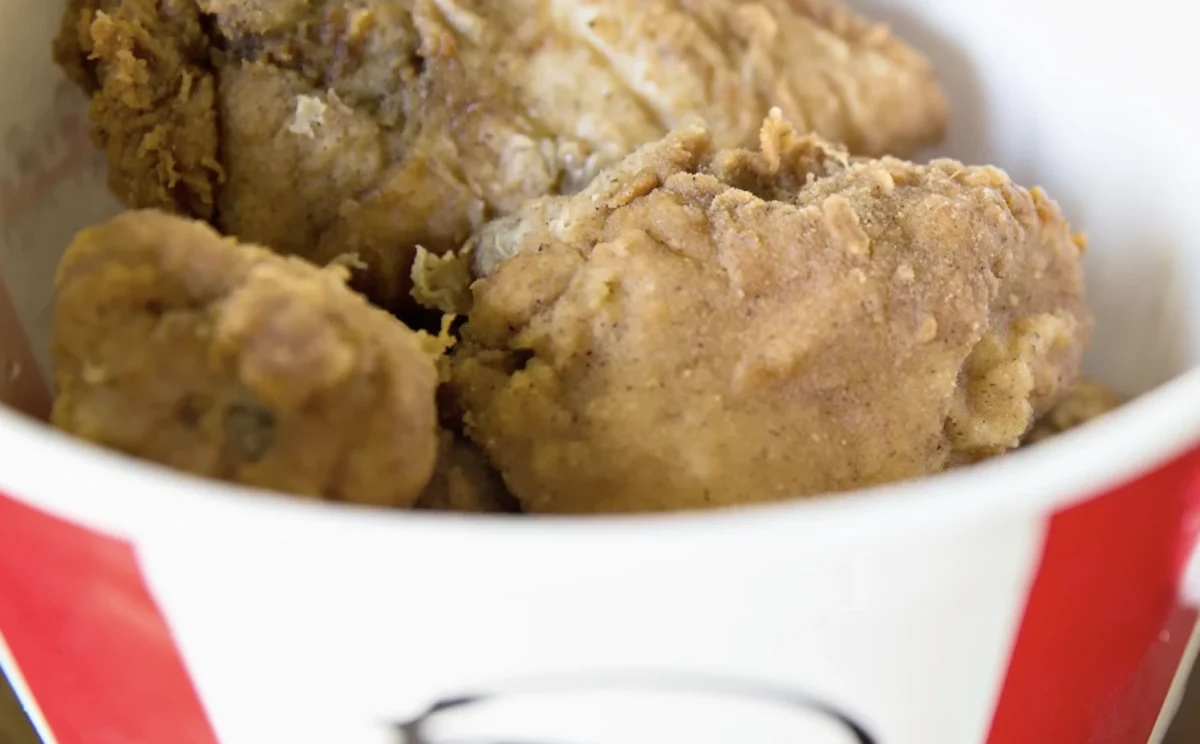
KFC invented the modern fried chicken restaurant. It made the bucket famous. It turned the Colonel into a global cultural icon recognised in more than 150 countries. And yet, in the United States — the market where fast food chicken has never been more competitive or culturally dominant — KFC has spent the better part of a decade watching from the sidelines as rivals built the industry around it.
That changes now, at least if KFC’s biggest global reinvention in recent memory goes according to plan.
On June 15, 2026, KFC announced a sweeping transformation spanning its menu, its physical restaurants, and its brand identity — changes it is describing as the launch of its “next chapter.” The announcement covers new boneless menu lines, a proprietary beverage platform, a global sauce library of more than 20 flavours, immersive next-generation restaurant designs, and a refreshed visual identity rolling out across packaging, digital platforms, and advertising worldwide.
The ambition is unmistakable. Whether the execution matches it is the defining question facing KFC and its parent company, Yum! Brands, over the next 12 to 24 months.
How KFC Got Here: A US Business Under Pressure
Understanding why 2026’s rebrand matters requires understanding how dramatically the competitive landscape has shifted beneath KFC’s feet.
Chicken is the hottest protein in American fast food. Chick-fil-A has built a multi-billion dollar empire on the back of a focused menu and exceptional service standards. Popeyes’ 2019 chicken sandwich ignited a social media phenomenon that permanently repositioned the chain as a cultural force. Raising Cane’s has expanded rapidly with an even narrower product focus — chicken tenders and dipping sauce, and nothing much else. Even McDonald’s, a burger institution, has rebuilt portions of its growth strategy around chicken, with the McChicken lineup driving meaningful traffic.
In this environment, KFC — which genuinely did make chicken famous, and which the industry acknowledges as the originator of the modern fried chicken chain — finds itself in fourth place by US market share among dedicated chicken restaurants. Its US business now generates less than 5% of Yum! Brands’ overall operating profit. The US has slipped to third place in KFC’s global sales ranking, trailing both China and Europe. Yum! Brands has stopped reporting same-store sales figures for KFC’s US operations separately — a quiet acknowledgment that the segment has become too small to meaningfully move the needle on consolidated results.
The irony is acute. KFC also claims it invented the chicken tender — a product that has become the dominant format preference for American fast food consumers, who have shifted toward boneless chicken and dipping sauces as their primary choice. Yet for years, KFC remained primarily associated with its bone-in bucket — a format that is losing ground to the very product the chain says it created.
In 2025, KFC launched a US-specific turnaround plan. The 2026 global rebrand is the public-facing, large-scale expression of that plan reaching international markets.
What Is Actually Changing: A Full Breakdown
1. Dipped and Dunked: The Boneless Pivot
The most substantive menu shift in the 2026 rebrand is KFC’s decisive move toward boneless chicken formats. The chain is expanding its tenders lineup and launching two new product platforms built explicitly around sauce-forward, boneless eating experiences.
Dipped features crispy tenders and other boneless items paired with sauces drawn from KFC’s new global sauce pantry. The pantry contains more than 20 options, ranging from updated takes on familiar flavours to internationally inspired recipes — including Chimichurri Ranch, Hot Honey Habanero, and a range of locally adapted options that vary by market. The philosophy is explicit customisation: customers can mix, match, and personalise their meals around the sauces rather than around the format of the chicken itself.
Dunked takes the sauce-forward concept further, offering tenders, wings, and sandwiches that are fully coated in sauce — described by KFC as an immersive, flavour-first experience designed for consumers who want every component of their meal saturated with bold flavour from the first bite. Dunked is already available in South Africa and India, with global rollout following through 2026.
KFC Chief Concept Officer Christophe Poirier has stated clearly that the chain is shifting its primary emphasis away from bone-in chicken. In his words, the goal is to ensure KFC’s tenders are the largest, most tender, and crunchiest available anywhere — a direct challenge to the product standards of competitors like Raising Cane’s and Chick-fil-A, who have built their entire business cases on tender quality.
2. KWENCH by KFC: The Beverage Play
One of the most strategically significant elements of the 2026 rebrand is the expansion of KWENCH by KFC — a proprietary beverage platform that was piloted in the United Kingdom and Ireland and is now being made permanent across multiple global markets through 2026.
KWENCH includes boba refreshers, Krunch Shakes, sparkling lemonades, and iced coffees. Its expansion is not primarily a menu diversity play — it is a margin and traffic strategy that mirrors moves already made by McDonald’s and Starbucks.
The economics of beverages in fast food are fundamentally different from the economics of food. Drinks carry significantly higher profit margins than any food item, require less labour to prepare, and generate incremental visits that are additive to — rather than in competition with — meal occasions. McDonald’s CosMc’s spinoff and its broader McCafé investments have demonstrated that US consumers are increasingly willing to make dedicated beverage-only visits to fast food chains. Starbucks has built its entire business model on the behavioural pattern of daily drink visits that anchor a customer’s routine.
KFC’s KWENCH platform is an attempt to insert the brand into that same daily consumption pattern — turning KFC from a place customers visit for dinner once a week into a brand that captures morning iced coffee visits, afternoon boba runs, and snack-time milkshake stops. If successful, it would materially change both the traffic profile and the revenue mix of KFC locations.
KWENCH will expand to permanent menus in Australia and Canada in 2026, with the US market to follow as part of the broader rollout.
3. Next-Generation Restaurant Design
The physical transformation of KFC’s restaurant estate is perhaps the most visible and ambitious component of the rebrand.
KFC is opening what it describes as a “new generation” of restaurants this summer — spaces designed to feel fundamentally different from the functional fast food environments that have defined the chain’s interior design for decades. The first location will open in McKinney, Texas, with a two-storey flagship planned for Dubai later in the autumn.
Poirier compared the intended atmosphere to attending a concert at the Sphere in Las Vegas — a reference to the immersive, technology-driven entertainment venue that has redefined what an experiential venue can feel like. He has also cited the success of Taco Bell’s Live Más Cafés — the premium café-style format launched by KFC’s Yum! Brands sibling — as an inspiration for the direction KFC is taking its physical spaces.
The next-generation design is intended to be more hospitality-driven, more dynamic, and more experiential than the standard QSR environment. The goal is to shift KFC from being a place people stop at because it is convenient, into a destination they seek out because the experience itself has value.
Whether this translates into sustained traffic gains — rather than the initial novelty surge that typically accompanies high-profile restaurant redesigns — will be one of the most closely watched tests of the broader rebrand strategy.
4. Fresh Branding Across All Touchpoints
The rebrand also encompasses a refreshed visual identity — updated packaging, new digital platform aesthetics, and revised advertising creative — designed to make KFC feel more modern and more relevant to the consumers who are currently choosing its competitors.
The branding update is rolling out first in the UK and Ireland across packaging and digital touchpoints in the coming weeks, before extending to Australia, the US, and additional markets through the remainder of 2026.
The Rollout Timeline
KFC is sequencing the rebrand with the UK and Ireland as the lead market, a choice that reflects the chain’s stronger brand equity and market position in Europe relative to its challenged US standing.
Global rollout timeline
KFC’s International Advantage: The Other Side of the Story
While the domestic US narrative for KFC is one of decline and recovery, the international picture is strikingly different — and it provides both the financial cushion that makes this rebrand possible and the strategic playbook the US operation is now attempting to follow.
KFC is a genuine powerhouse in China, where it has operated for nearly four decades and built a deeply localised menu that has won over Chinese consumers in ways that many Western food brands have never managed. The chain’s willingness to offer local dishes, regional flavours, and culturally resonant products — rather than insisting on a globally uniform menu — is widely credited as the reason KFC succeeded in China where competitors struggled.
Similar localisation strategies have produced strong results in Thailand, South Africa, and across much of Southeast Asia and the Middle East. KFC’s international operations are, by any financial measure, the engine of Yum! Brands’ overall performance in the KFC segment.
The new global sauce pantry — with its more than 20 options adaptable to local market preferences — reflects the direct application of this international localisation lesson to the product architecture being built for the rebrand. Markets can tailor which sauces and menu combinations they feature based on local consumer taste profiles, rather than being locked into a globally standardised offering.
The Competitive Context: Why This Had to Happen Now
The urgency behind KFC’s 2026 rebrand is not manufactured. It reflects a genuine inflection point in the competitive dynamics of the US fast food chicken market.
Chick-fil-A operates approximately 3,000 US locations and generates more revenue per restaurant than almost any other fast food chain in the country — all on a six-day operating schedule. Its service standards and product consistency have created a loyal customer base that competitors find exceptionally difficult to erode.
Popeyes rebuilt its brand identity around a single sandwich launch in 2019 and has since sustained that momentum with continued product innovation and marketing that positions the chain as culturally relevant in a way that legacy fried chicken brands have struggled to achieve.
Raising Cane’s has grown from a regional Louisiana chain into a national presence by doing essentially one thing — chicken tenders and dipping sauce — with a level of product focus and quality consistency that has attracted cult-level loyalty.
And new concepts continue to emerge. The chicken sandwich and tender format has proven commercially viable at every price point and service style, from fast casual to ghost kitchen, from premium sit-down to street food. The barriers to entry in the chicken restaurant category are low enough that meaningful new competition appears with regularity.
KFC, with its 34,000 global locations, its decades of brand equity, and its genuine claim to have originated the category, should be a dominant force in this environment. The 2026 rebrand is the chain’s most ambitious attempt in years to translate that institutional advantage into competitive relevance.
The Headwinds: What Could Go Wrong
The strategic logic of the rebrand is sound. The execution challenges are real.
US consumers are under meaningful financial pressure. The cost of dining out has risen faster than the cost of eating at home throughout the post-pandemic period, and consumer research consistently shows that Americans are planning to eat out less frequently and to order cheaper or fewer items when they do. A premium, immersive restaurant experience designed to compete with the Sphere may not be the most urgently relevant proposition for a price-sensitive consumer base.
The beverage play depends on behaviour change — convincing customers who currently associate KFC with a dinner occasion to also think of it as a destination for a morning coffee or an afternoon boba. That kind of brand positioning shift takes sustained marketing investment and years of consistent execution to accomplish.
And the competition will not stand still. Every improvement KFC makes to its tender quality, its sauce range, and its restaurant atmosphere is an improvement it is making into a market where Chick-fil-A is also investing, Popeyes is also innovating, and an entire ecosystem of newer chicken concepts is also competing for the same consumer occasions.
The rebrand is a necessary and well-conceived strategic move. It is not a guaranteed outcome.
What This Means for Consumers: What to Expect and When
For customers in the UK and Ireland, the new tenders, nine new sauces, and refreshed branding are arriving in the coming weeks. KWENCH by KFC is already available in select UK and Ireland locations and will become a permanent fixture.
For Australian and Canadian consumers, KWENCH menus will become permanent through 2026, along with the expanded boneless chicken and sauce offerings.
For US consumers, the full menu rollout follows the international lead markets, with the first next-generation restaurant opening in McKinney, Texas, this summer. The Texas location will be the most concrete early test of whether KFC’s immersive restaurant concept generates the kind of visit frequency and consumer enthusiasm the chain needs to shift its domestic trajectory.
Key Takeaways
- KFC has launched its most significant global rebrand in years, covering menu, restaurant design, branding, and beverages simultaneously
- The chain is making a decisive pivot toward boneless chicken — tenders, wings, and sandwiches — with two new product lines: Dipped and Dunked
- KWENCH by KFC introduces boba refreshers, iced coffees, sparkling lemonades, and milkshakes as a standalone beverage platform targeting incremental daily visits
- A global sauce pantry of more than 20 options — including Chimichurri Ranch and Hot Honey Habanero — enables localisation and personalisation across markets
- Next-generation restaurant designs begin in McKinney, Texas, this summer, with a Dubai flagship following in autumn
- The US market remains KFC’s greatest competitive challenge; the chain holds fourth place in US chicken market share despite being the category’s founder
- KFC’s international operations — particularly in China, Thailand, and South Africa — are financially strong and provide the strategic template the US is now following