From the creators of Little Nightmares comes a darker and more grounded nightmare. Reanimal abandons surreal dream logic in favor of something more disturbing: the psychological devastation of war. At first glance, it appears to be a tale of children fighting monsters to save their friends. But beneath the flooded streets and grotesque creatures lies a tragic story of betrayal, trauma, and survival.
This is not a rescue story. It is a story about guilt.
The Story of Reanimal
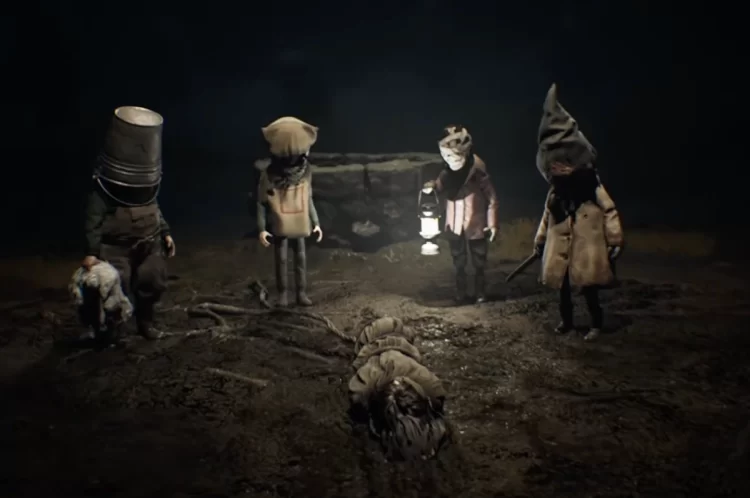
The game opens with five children standing around a well — an image that feels like the beginning of a fairy tale. Yet as the journey unfolds, it becomes clear that this world is not fantasy. It is a battlefield.
Throughout the game, players encounter:
- Destroyed cities torn apart by artillery
- Trenches and wounded soldiers
- Religious shrines dedicated to strange animal deities
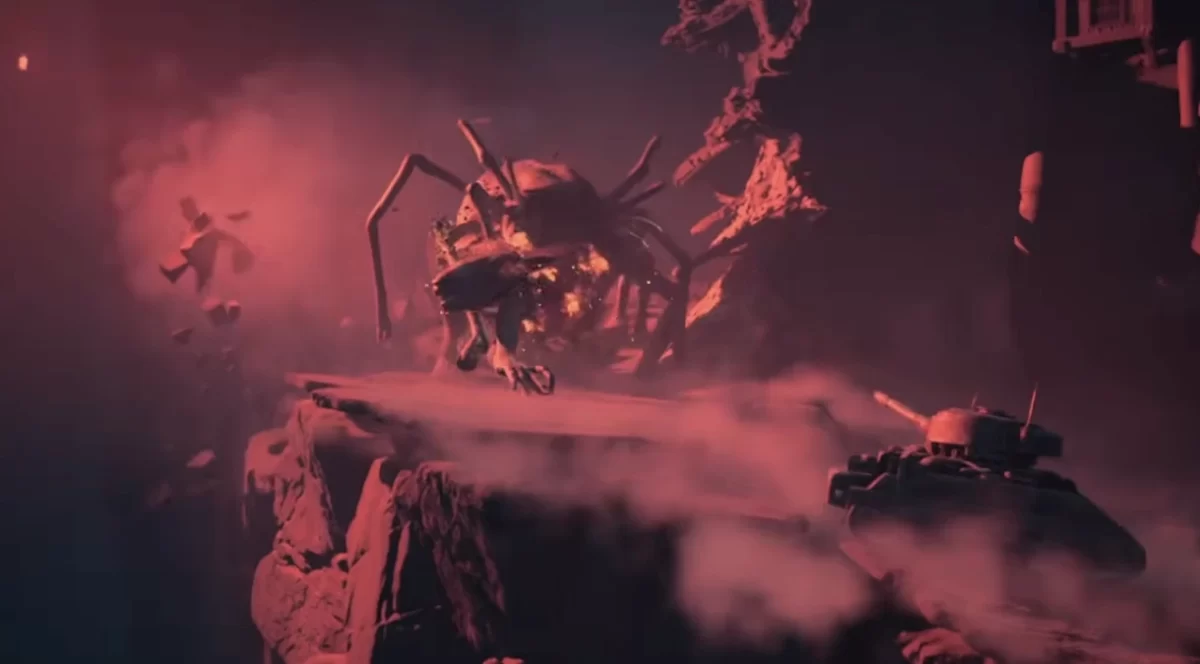
- Massive creatures like a giant pig and an enormous pelican
Unlike the abstract fears presented in Little Nightmares, Reanimal grounds its horror in war. The monsters roaming the landscape — bloated swimmers in the floodwaters, a skin-stealing “Sniffer,” and other grotesque beings — may not be supernatural at all. Instead, they can be interpreted as manifestations of trauma seen through a child’s fractured imagination.
The Rescue Mission
You begin controlling a boy and a girl searching for their three missing friends — Hood, Bucket, and Bandage. One by one, the children are taken by horrific creatures:
- Hood is abducted by the Sniffer.
- Bandage is carried away by a monstrous pelican.
- Bucket is sacrificed to a mother spider.
The remaining two press forward, even commandeering a tank in a desperate attempt to fight back. But beneath this apparent heroism lies a darker truth.
The Cinema Prophecy
Midway through the game, a disturbing scene plays in an abandoned cinema. On screen:
- Four rabbits surround a single rabbit.
- One falls into darkness.
- A decapitation occurs.
- A feast is prepared.
The symbolism is unmistakable: one must be sacrificed for the others.
There are five children. Only one is the target.
The imagery strongly suggests that the rescue narrative is misleading. Rather than trying to save their friend, the group may have already chosen her as an offering.
The Girl and the Sheep
Throughout the game, the girl suffers violent seizures accompanied by flashes of red and the image of a sheep. Eventually, in a shocking moment, she regurgitates a sheep-like creature in a grotesque reverse birth. The being grows into a monstrous titan that consumes both the boy and herself.
This sheep entity appears to represent internalized guilt, survival trauma, or the burden of being “chosen.”
The monster was never external. It was inside her all along.
The Normal Ending
In the standard ending, the truth begins to surface.
Inside a small cabin, the girl discovers:
- A dead rabbit.
- Drawings of five rabbits in a circle.
The ritual was planned.
Later, we see the four boys — including the one we controlled — dragging the girl back to the well from the opening scene. One carries a dead rabbit, confirming that the earlier sacrifice was a rehearsal.
They bind her and throw her into the well as an offering to stop the war.
After the credits roll, red water pours from the well.
The sacrifice failed.
The war did not end. Instead, the act stained them permanently — symbolized by the crimson flood.
In this version, the boys are not heroes. They are children driven by desperation who chose to trade a friend for survival.
The Secret Ending
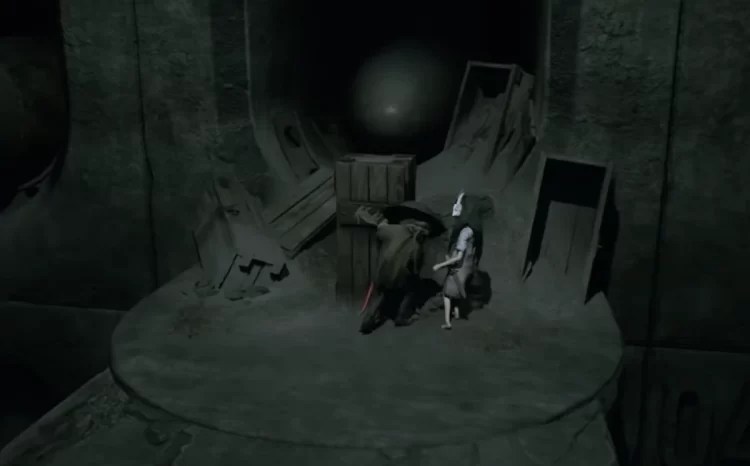
Unlocking all hidden coffins scattered throughout the game reveals a chilling twist.
Each coffin corresponds to one of the boys.
They are already dead.
The secret ending suggests that the girl survived the war alone. The rescue journey we played was not reality — it was her hallucination. The boy she believed was helping her? A projection of longing and denial.
The monsters devouring her friends may represent her mind replaying their real deaths in the war. She imagines them dying violently because that is how she processes both their betrayal and their loss.
Instead of being sacrificed, she escaped the well and climbed back into a destroyed world — alone.
To cope with isolation, she “reanimates” her friends in memory.
The title Reanimal may hint at this: to re-animate what is gone.
The Meaning Behind Reanimal
At its core, Reanimal is about what war does to children.
- The war came first.
- The ritual was born from desperation.
- The betrayal was fear-driven, not evil.
Like a twisted echo of “Lord of the Flies,” the group fractures under pressure. Survival replaces friendship. The girl becomes currency.
But the secret ending reframes everything as a ghost story rather than a crime story.
The true horror is not that she was sacrificed.
The true horror is that she survived.
The sheep inside her symbolizes survivor’s guilt — the unbearable weight of living when others died. Her hallucinated companions show her refusal to let go of connection, even after betrayal.
And deep within the well in the final scene, masked figures watch from below. Are they past sacrifices? Or the ghosts of the boys waiting for her?
Reanimal leaves us with no clear answers — only the image of a child standing in a silent, ruined world, clinging to memories that may never have been real.
Final Thoughts
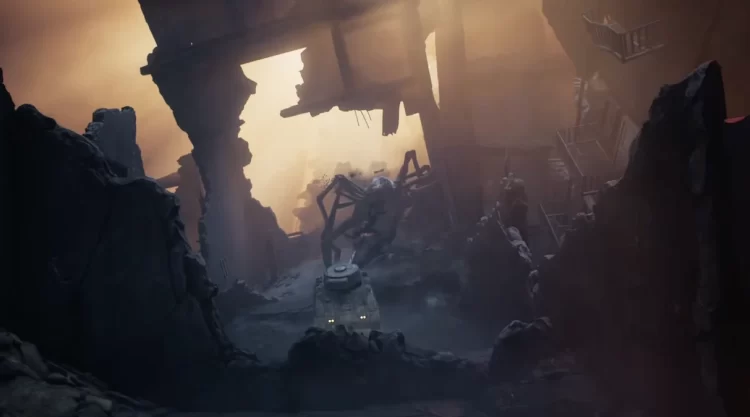
Reanimal disguises itself as a monster-filled adventure, but beneath its grotesque imagery lies a devastating meditation on trauma, guilt, and childhood innocence destroyed by war.
The normal ending tells a story of betrayal.
The secret ending tells a story of loneliness.
Together, they create one of the most haunting narratives in modern horror gaming — not because of its monsters, but because of its humanity.