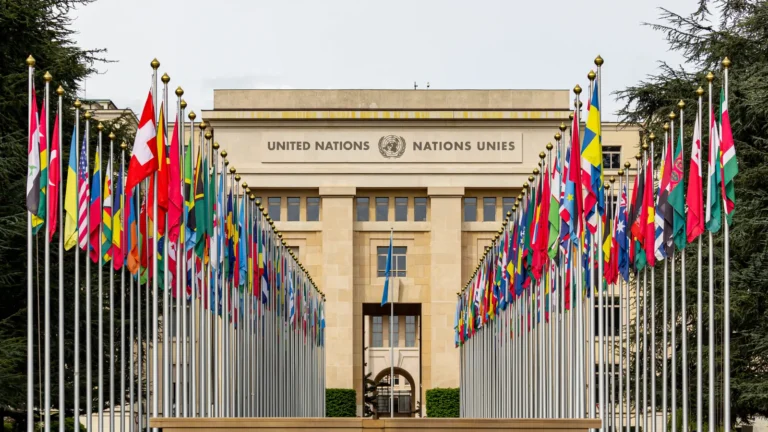
The phrase “new world order” is often used dramatically. But behind the rhetoric lies measurable change.
Data from institutions like the International Monetary Fund and the World Bank show a steady redistribution of global economic weight. Military alliances are adapting. Trade routes are reorganizing. Strategic competition is intensifying.
This post answers the questions:
- Is the U.S.-led global order declining?
- Is the era of globalization ending?
- What is BRICS and why does it matter?
- How is China rising in the global power structure?
- How is Russia reshaping alliances?
- What role does NATO play in a multipolar world?
Let’s examine the data—not speculation.
What Is the “New World Order” — And What Does Multipolar World Explained Mean?
A multipolar world refers to a global system where power is distributed among multiple major states rather than dominated by a single superpower.
1991–2008: Unipolar Moment
After the Cold War:
- The U.S. dominated militarily and financially.
- The U.S. dollar anchored global trade.
- Institutions reflected Western leadership.
2020–Present: Strategic Rebalancing
Today we see:
- Asia driving the majority of global growth.
- Regional trade blocs expanding.
- Alternative financial arrangements emerging.
- Increased military modernization across regions.
This does not necessarily mean collapse. It means redistribution.
Is the U.S.-Led Global Order Declining?
Search volume for “decline of US dominance” has increased significantly in recent years. But what does data suggest?
Economic Share Shift
| Year | U.S. Share of Global GDP (PPP) |
|---|---|
| 1990 | ~21% |
| 2025 (est.) | ~15% |
(Source: IMF estimates)
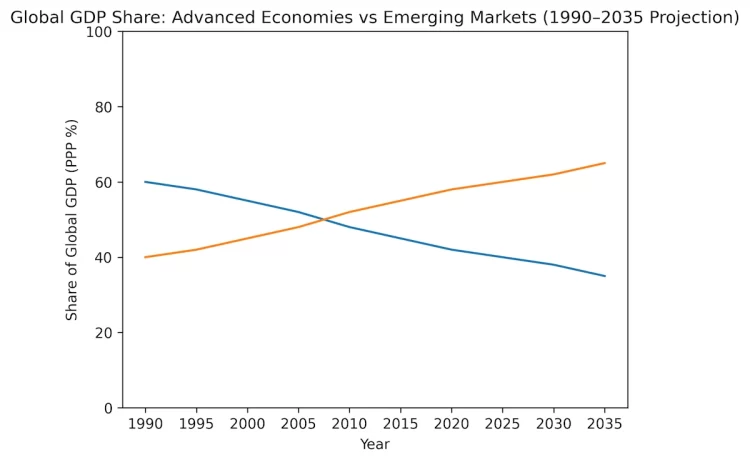
Meanwhile, emerging markets collectively have increased their share.
However:
- The U.S. still controls the dominant reserve currency.
- U.S. capital markets remain the largest and most liquid.
- Military spending exceeds any single competitor.
The shift is relative, not absolute.
Conclusion: The U.S.-led order is not disappearing—but it is facing stronger peer competition.
The Rise of China in the New Global Power Structure
China has become central to discussions about the new world order.
Key Indicators:
- Largest trading partner for many developing nations.
- Major infrastructure financing through global initiatives.
- Rapid technological and industrial capacity expansion.
- Growing military modernization.
China’s GDP (PPP basis) now exceeds that of the U.S., according to IMF data.
But challenges remain:
- Demographic slowdown.
- Debt concerns in property and local government sectors.
- Geopolitical friction.
China’s rise represents the strongest structural change in global power over the past 30 years.
How Russia Is Reshaping Global Alliances
Russia plays a strategic role in energy markets and security alignments.
Recent developments have:
- Accelerated energy realignment between Europe and Asia.
- Increased defense spending across NATO members.
- Strengthened partnerships between Russia and select emerging economies.
Sanctions have also pushed reserve diversification and alternative payment systems.
Russia’s role illustrates how geopolitical pressure can reshape economic networks.
What Is BRICS and Why It Matters Now?
BRICS originally included:
- Brazil
- Russia
- India
- China
- South Africa
Recent expansion discussions have increased global attention.
Why BRICS Matters:
- Represents a large share of global population.
- Increasing share of global GDP (PPP).
- Discussions around alternative trade settlement mechanisms.
- Greater coordination among emerging markets.
However:
BRICS is not a military alliance.
Its members have differing interests.
Its cohesion varies by issue.
Still, it signals growing coordination outside traditional Western institutions.
The Role of NATO in a Multipolar World
NATO remains the world’s most powerful military alliance.
In a multipolar world:
- NATO expansion has accelerated.
- Defense budgets are rising.
- Strategic competition is intensifying.
NATO’s role is no longer just territorial defense—it includes cyber, energy security, and strategic deterrence.
Its evolution reflects how the global security architecture is adapting.
Is the Era of Globalization Ending?
Globalization is not ending—but it is changing.
From Hyper-Globalization to Strategic Regionalization
Before 2008:
- Just-in-time supply chains.
- Maximum cost efficiency.
- Deep global integration.
Now:
- “Friend-shoring” and regional diversification.
- Industrial policy resurgence.
- Strategic autonomy goals.
World trade growth has slowed relative to GDP compared to the early 2000s.
But cross-border digital flows are expanding rapidly.
This is a reconfiguration—not deglobalization.
Scenario Analysis: Where Is the New World Order Headed?
Best Case
- Stable multipolar balance.
- Cooperative competition.
- Managed debt and moderate growth.
Base Case
- Persistent rivalry.
- Regional fragmentation.
- Moderate volatility.
Worst Case
- Escalated military conflict.
- Financial fragmentation.
- Severe trade breakdown.
Most economists currently model the base case as most probable.
What It Means for You
For Investors
- Diversify geographically.
- Monitor emerging market trends.
- Follow central bank policy shifts.
For Professionals
- Build geopolitical literacy.
- Focus on AI, energy transition, infrastructure sectors.
For Business Owners
- Stress test supply chains.
- Hedge currency exposure.
- Monitor regulatory shifts.
Takeaway
The “new world order” is not a conspiracy phrase.
It is a structural transformation.
The global system is shifting from concentrated dominance toward a more competitive multipolar framework.
The key question is not whether change is happening.
It is how prepared you are for it.