The End of a Toy Craze?
This summer, an “ugly-cute” creature named Labubu took the world by storm. Fans lined up for hours, social media feeds filled with unboxing videos, and resellers flipped rare editions for tens of thousands of dollars. The toy’s explosive popularity helped Pop Mart, the Chinese company behind it, earn over US$600 million in revenue and briefly turned its founder into one of China’s richest entrepreneurs.
But every craze has a cycle — and Pop Mart is learning that lesson fast. Within months of Labubu’s global peak, the company’s share price fell nearly 25%, erasing billions in market value. The hype that once fueled its meteoric rise is now fading, leaving one big question:
Can Pop Mart survive beyond the Labubu phenomenon?
How Pop Mart Built an Empire of Surprise
Pop Mart didn’t just sell toys — it sold mystery.
Its secret weapon was the blind box: sealed packages hiding collectible figures that buyers can’t see until they open them.
The model plays on a psychological mechanism known as variable reward, the same principle behind slot machines — unpredictable outcomes that keep consumers coming back for “just one more try.” Yet unlike gambling, every purchase guarantees a toy, turning risk into fun.
Founded in 2010 by entrepreneur Wang Ning, Pop Mart spent its first few years struggling as a lifestyle store. The breakthrough came in 2016, when it adopted the blind box system and introduced its own collectible characters. By 2018, the company’s profits soared to nearly 100 million yuan, and the brand transformed from a niche player into a global trendsetter.
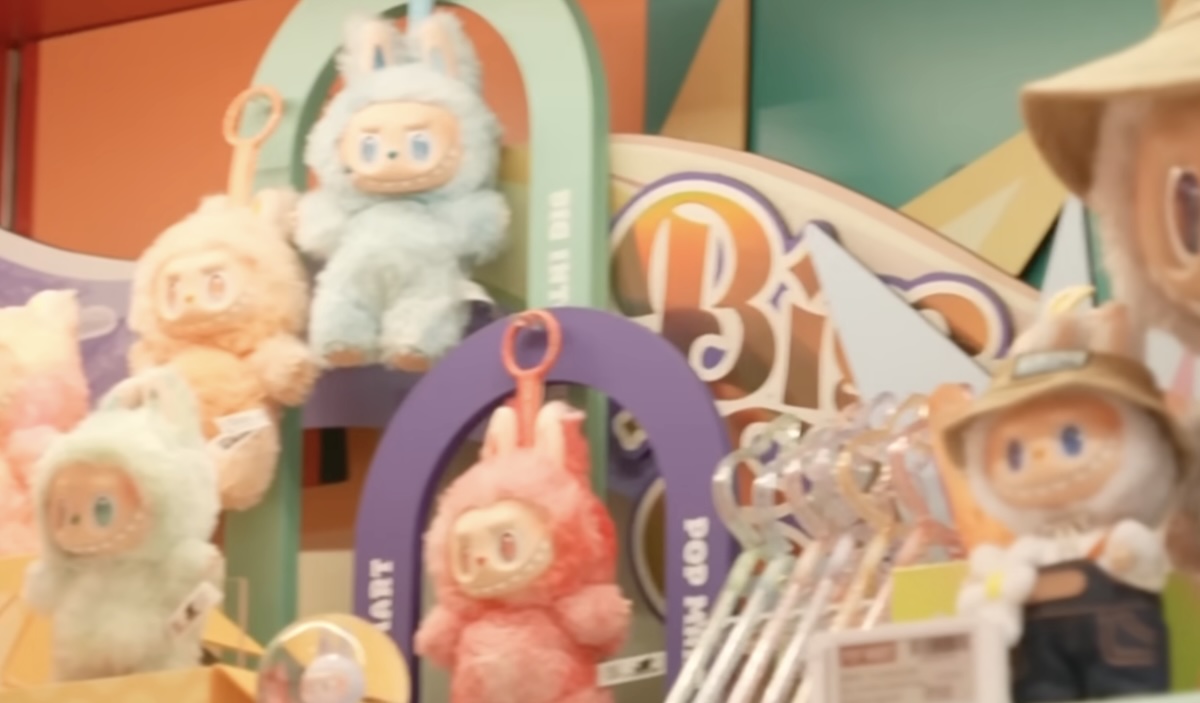
Today, Pop Mart’s stores — filled with claw machines, vending robots, and bright pastel displays — are pilgrimage sites for collectors across Asia and beyond.
The IP Strategy Behind Pop Mart’s Success
Unlike traditional toy manufacturers that mass-produce familiar characters, Pop Mart operates like a talent agency for design IPs. It scouts artists worldwide, secures licensing rights, and transforms their creations into collectible superstars.
Its first major hit, Molly, a pouty-faced figurine by Hong Kong artist Kenny Wong, proved the power of exclusive intellectual property. Pop Mart doubled down, acquiring or developing over 90 IPs ranging from cute monsters to stylized pop icons.
In 2024, more than 85% of Pop Mart’s revenue came from exclusive in-house or artist-collaborated designs — a strategy that gives it complete control over branding and merchandising.
In many ways, Pop Mart isn’t just a toy company — it’s a character incubator, crafting the next generation of cultural icons much like Sanrio did with Hello Kitty or Disney did with Mickey Mouse.
Labubu: From Cult Toy to Global Phenomenon
Then came Labubu — the mischievous, elf-like creature with a snaggletoothed grin that captured global imagination.
Created by Hong Kong-born artist Kasing Lung, Labubu was part of the Monsters book series before Pop Mart signed it as an exclusive IP in 2019. For years, it remained a niche designer toy. But in 2023, Pop Mart gave it a makeover — turning the vinyl figure into a plush, portable charm.
The result? Instant frenzy.
Celebrity exposure, including BLACKPINK’s Lisa showing off her Labubu collection, turned the toy into a pop culture status symbol. Fans fought over limited editions in London and Tokyo, while rare first-generation figures sold for up to US$150,000 at auction. On Chinese social media, the hashtag “Buying Labubu is more profitable than buying gold” trended for weeks.
In the first half of 2025, Labubu accounted for nearly 35% of Pop Mart’s total revenue, driving overseas sales up five-fold. For a brief moment, Labubu wasn’t just a toy — it was a cultural phenomenon.
The Crash and the Challenge
But as every collector knows, hype is fragile.
By late 2025, the secondary market for Labubu began cooling. Prices dropped as Pop Mart ramped up production to meet demand. Analysts warned that the company had become too dependent on a single IP, echoing the cautionary tales of NFT and Beanie Baby bubbles.
In September, J.P. Morgan downgraded Pop Mart’s stock, citing weak catalysts and overvaluation. The company’s market cap tumbled as investors questioned whether the toy maker could sustain momentum beyond its flagship character.
History suggests they might be right to worry: according to Goldman Sachs, most trendy toy IPs have a lifespan of just two to three years. Only rare characters — like Hello Kitty — achieve multigenerational longevity.
Pop Mart’s challenge now is to prove it can do the same.
Pop Mart’s Reinvention Strategy
To avoid being a one-hit wonder, Pop Mart is already reinventing itself.
It’s expanding the Labubu universe through merchandise spinoffs — phone charms, apparel, and accessories — and experiential ventures like PopLand, a Beijing theme park where fans can interact with life-sized characters. The company is also producing an animated series and exploring feature film collaborations, aiming to turn Labubu from a collectible into a lifestyle brand.
But Pop Mart isn’t betting everything on Labubu. It’s nurturing a new generation of IPs, including Crybaby, Twinkle, Herono, and Peach Riot. Each character caters to distinct subcultures, from dreamy nostalgia to street fashion, reflecting Pop Mart’s goal to evolve into a multi-IP entertainment powerhouse.
The Next Big Bet: Can Crybaby Be the New Labubu?
Among the newcomers, Crybaby — a teary-eyed, pastel-colored figure — has emerged as a potential successor. Initially popular in Japan, Crybaby’s melancholic design resonates with Gen Z consumers who value emotional authenticity.
Collectors in the U.S. and Europe have already begun hunting for limited editions, hoping to “catch the next Labubu early.” Its rising popularity suggests Pop Mart’s ability to spot trends before they go mainstream remains sharp.
This approach aligns with China’s “lipstick effect” economy, where young consumers seek affordable luxuries that offer small doses of happiness. Pop Mart toys — priced low enough for impulse buys but high enough to feel premium — perfectly fit that emotional consumption pattern.
What’s Ahead for Pop Mart and the Collectible Toy Industry
The collectible toy industry is rapidly evolving into a hybrid of art, fashion, and emotional retail. Designer toys are no longer just desk ornaments; they’re symbols of taste, identity, and nostalgia.
Pop Mart’s success shows how powerful storytelling and aesthetics can turn a simple figurine into a cultural export. But its future depends on mastering the balance between creativity and commercialization.
If it overproduces, it risks killing exclusivity. If it plays too safe, it might miss the next big trend. The company’s future lies in curating cultural moments, not just creating characters.
Industry watchers believe that if Pop Mart can build more cross-media partnerships — films, music, gaming, and fashion — it could become the “Sanrio of Generation Z.”
From Hype to Heritage
Pop Mart’s Labubu craze was more than a viral trend — it was proof that emotional design, scarcity, and storytelling could create billion-dollar fandoms.
But the company’s real test begins now. Can it transform fleeting hype into enduring heritage?
By investing in long-term IP development, expanding its global footprint, and embracing new cultural forms, Pop Mart has a chance to outgrow the blind box and build something far bigger — a universe of collectible dreams that last beyond the craze.