For decades, the story of American innovation has had a secret subtitle: Powered by Global Talent. Walk through the engineering hubs of Silicon Valley, the research labs of Texas, or the financial tech firms of New York, and you’ll find a common thread—brilliant minds from around the world, working side-by-side with American-born colleagues.
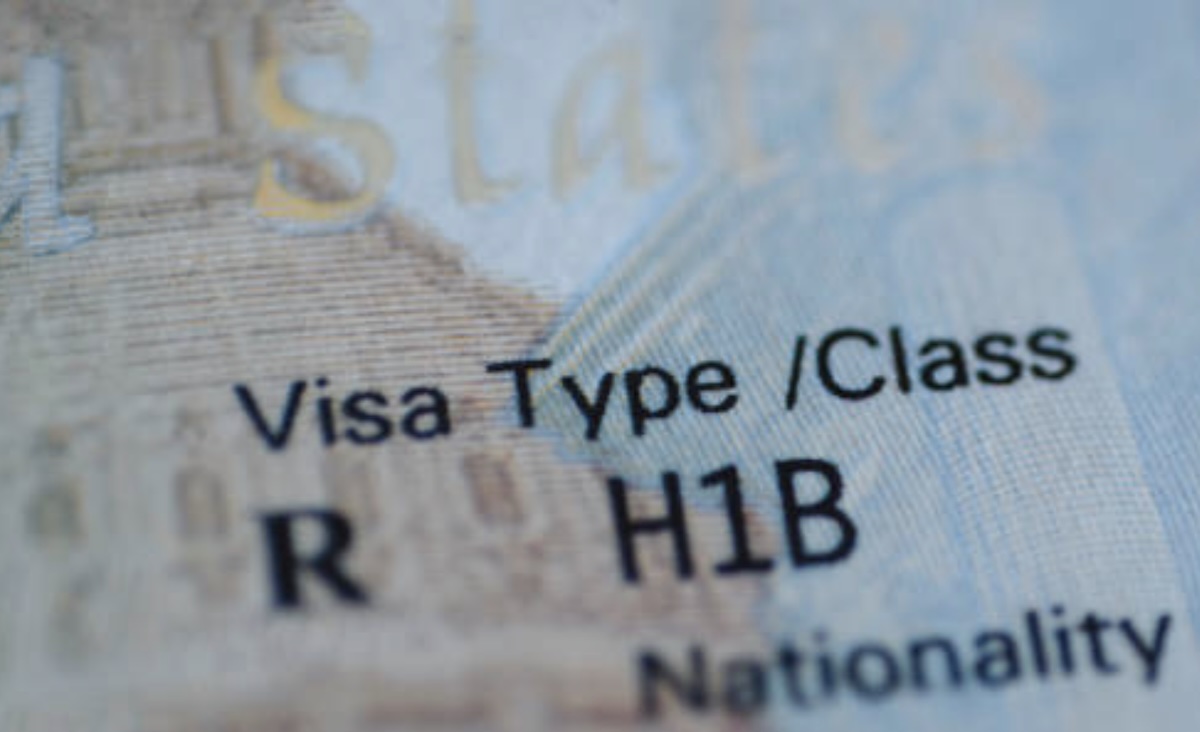
The ticket for many of these individuals has been the H-1B visa, a specialized program that has become one of the most debated, misunderstood, and pivotal elements of U.S. immigration policy.
Today, that story is undergoing a dramatic rewrite. The Trump administration has introduced a new chapter, proposing rules that would fundamentally reshape who gets these visas and at what cost. Let’s unravel the complex tale of the H-1B visa, from its origins to its uncertain future.
What is an H-1B Visa? The American Dream’s Work Permit
Imagine you’re a top software developer from India, an AI researcher from China, or a mechanical engineer from Germany. You receive a dream job offer from a leading U.S. tech company. There’s just one hurdle: you need permission to work legally in the United States.
This is where the H-1B visa comes in.
In simple terms, the H-1B is a non-immigrant visa that allows U.S. companies to employ foreign workers in specialty occupations. These are roles that require highly specialized knowledge and, typically, at least a bachelor’s degree or its equivalent in fields like:
- Technology (Software Development, Data Science, Engineering)
- Mathematics
- Finance
- Architecture
- Medicine
- Biotechnology
The visa is initially granted for three years and can be extended to six. It’s a temporary visa, but it’s often a stepping stone for those hoping to secure permanent residency (a green card) down the line. Crucially, the visa is sponsored by the employer, not the employee. The company must prove to the U.S. government that they need this specific talent and that they will pay them a prevailing wage that matches what an American worker would earn in the same role.
How the U.S. Granted H-1B Visas Before: The Lottery System
For years, the process was straightforward but fiercely competitive. The government capped the number of new H-1B visas at 65,000 per fiscal year, with an additional 20,000 reserved for those with a Master’s degree or higher from a U.S. university.
The problem? Demand always vastly exceeded supply. A company would identify a candidate and, on April 1st, submit an application for the upcoming fiscal year. If the number of applications received in the first week exceeded the cap (which it always did), U.S. Citizenship and Immigration Services (USCIS) would run a computerized lottery.
This random selection process was the great equalizer. A Fortune 500 company and a five-person startup had the same odds. Winning the lottery meant your application could be processed. Losing meant your candidate, no matter how talented, had to wait another year or explore other options. This system was criticized for being arbitrary, but it was the mechanism that governed the flow of global talent for a long time.
The New H-1B Visa Rules Under the Trump Administration: A seismic Shift
The Trump administration’s view of the H-1B program has been characterized by a central principle: “America First.” The argument is that the program, in its previous form, was used by some companies to replace American workers with cheaper foreign labor, undermining wages and opportunities.
While previous actions tightened regulations and increased scrutiny, a recent proposal marks the most radical change yet.
What’s the New Visa Policy Introduced?
In a bold move, President Trump has signed an executive action proposing two groundbreaking changes:
- A Massive Fee Increase: The most startling proposal is the imposition of a $100,000 application fee per H-1B visa. This isn’t a small adjustment; it’s a barrier designed to be prohibitive. Administration officials, like Commerce Secretary Howard Lutnick, suggested this fee could be paid upfront as a $300,000 lump sum for the standard three-year visa or in annual installments. The explicit goal is to make companies think twice about hiring foreign talent and to “incentivize companies to employ American workers.”
- The “Gold Card” Program: In a fascinating contrast, the administration also proposed a new “gold card” pathway. This program would fast-track visas for certain immigrants in exchange for a hefty fee—$1 million paid by the individual, or $2 million paid by a sponsoring company. This creates a two-tiered system: an ultra-expensive express lane for the wealthy or their sponsors, and an incredibly expensive standard route for everyone else.
This represents a fundamental philosophical shift: moving the H-1B program from a lottery-based system focused on skills to a market-based system increasingly influenced by wealth.
How This Will Affect the U.S. Economy: The Great Debate
The potential impact of these changes is a subject of intense debate among economists, business leaders, and policymakers.
The Potential Benefits (As Argued by Supporters):
- Protection of American Jobs: The primary goal is to force companies to recruit, train, and hire from the domestic workforce first.
- Higher Wages: By making foreign talent exorbitantly expensive, the theory is that companies will be compelled to raise wage offers to attract American workers for these specialized roles.
- Curbing Exploitation: The high fee could deter consulting firms that have been accused of misusing the program to import lower-wage workers.
The Potential Consequences (As Argued by Critics):
- Brain Drain: The U.S. risks losing the global competition for top talent. Other countries like Canada, Australia, and Germany are actively rolling out welcome mats for these same skilled workers, who will simply take their innovation and economic contributions elsewhere.
- Harming American Companies: Startups and even established tech firms that rely on H-1B visas to fill critical talent gaps may be unable to afford the new fees. This could stifle innovation, delay projects, and reduce the global competitiveness of entire U.S. industries.
- Increased Costs for Consumers: The massive cost of securing a visa will likely be passed on to consumers through higher prices for software, services, and products.
- A Two-Tiered System: The “gold card” creates a system where access to America is auctioned to the highest bidder, potentially sidelining highly skilled but less wealthy individuals who have historically driven innovation.
The Bottom Line
The story of the H-1B visa is a story about American identity and economic policy. Is the nation’s strength best preserved by protecting its existing workforce from foreign competition, or by continuing to attract and assimilate the world’s best and brightest, as it has for centuries?
The new proposed rules are a dramatic experiment in answering that question. They bet that the benefits of forcing investment into American workers will outweigh the costs of potentially sidelining the country from the global flow of talent. Only time will tell if this new chapter will fuel American prosperity or inadvertently write its characters out of the story of global innovation altogether.