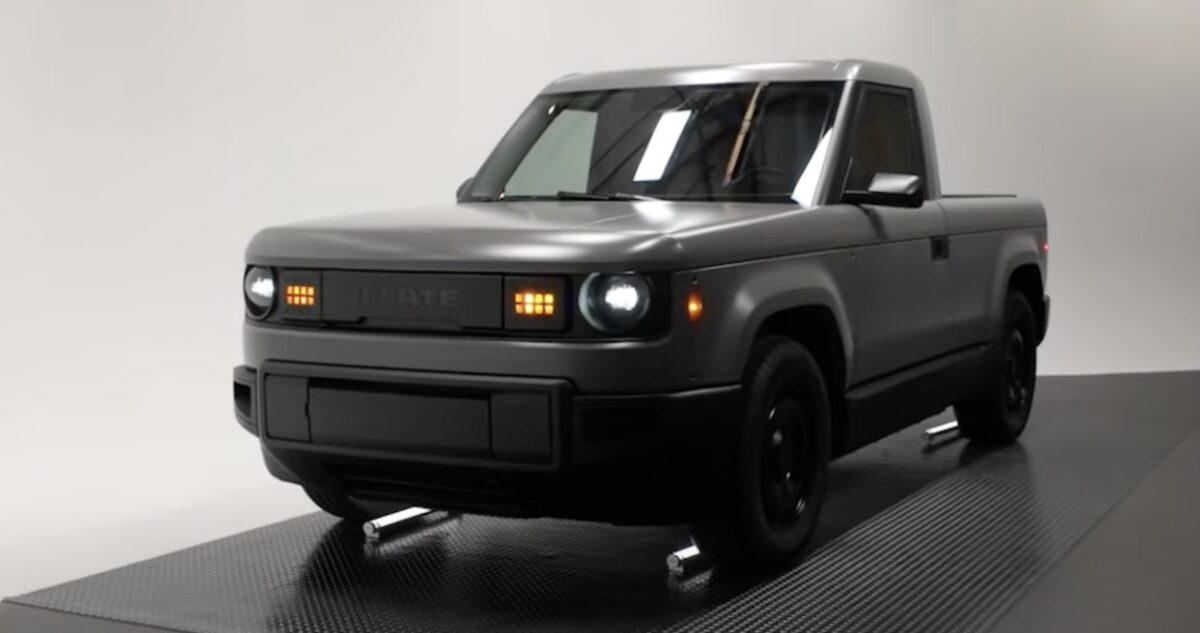
In a market dominated by six-figure electric vehicles overloaded with tech, the Slate Truck electric vehicle offers a stark contrast—and a radical proposition. Starting at under $20,000 after incentives, this American-made EV is shaking the status quo with a minimalist design, rugged materials, and a manufacturing strategy built around simplicity and personalization.
A Bare-Bones EV Built for Purpose
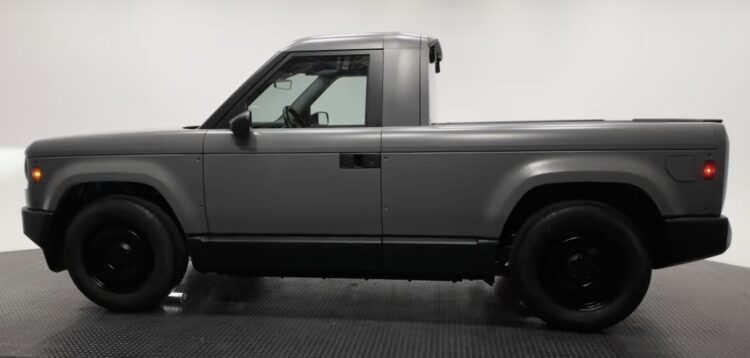
The Slate Truck isn’t chasing luxury or range supremacy. It’s a two-seater utility EV with 150 miles of range, a durable bed large enough for a sheet of plywood, and zero frills. There’s no paint, no stereo, and no touchscreen. What you get instead is a practical tool wrapped in molded polypropylene composite—designed to resist scratches and avoid paint chips entirely.
This unconventional approach isn’t about cutting corners. It’s about cutting waste. By eliminating paint shops and metal stamping, Slate drastically reduces production complexity and cost. The result is a truck that skips the luxury tax without skipping functionality.
Minimalism Meets Customization
Every detail of the Slate Truck is meant to be personalized, modified, and maintained by the owner. Available only in a single gray tone, the body is made for easy DIY vinyl wrapping. The spartan cabin is designed for upgrades, offering mount points for gadgets, soundbars, or tablets—whatever the owner decides to bring.
Slate plans to sell modular upgrade kits, including an SUV conversion that adds rear seats and rollover protection. This transforms the simple two-seat truck into a versatile, family-ready EV—all installable from home or via certified service centers.
Designed, Engineered, and Built in America
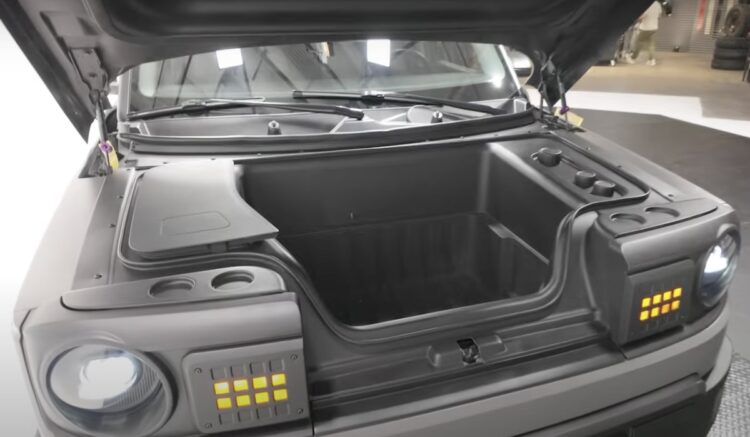
Unlike many budget EV startups that rely on overseas assembly, the Slate Truck is designed, engineered, and built in the United States, with most of its supply chain also domestic. Assembly is planned at a new facility near Indiana, optimized for plastic injection molding and streamlined production lines.
By offering only one model, in one trim, Slate removes nearly all factory complexity. This lean strategy supports rapid scalability and keeps overhead low. Slate expects to achieve cash flow positivity shortly after production begins—a feat few EV startups can claim.
A New Vision for Vehicle Ownership
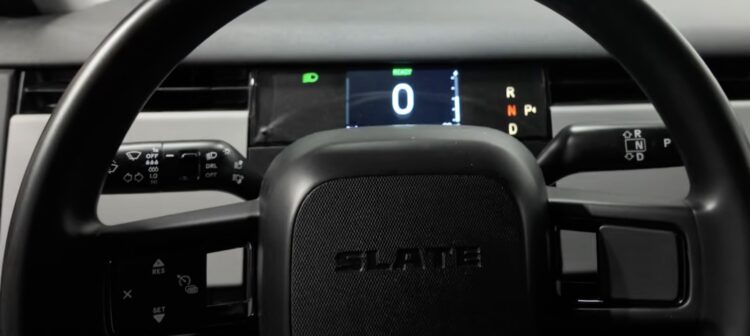
Perhaps the most intriguing aspect of the Slate Truck isn’t its price or manufacturing—it’s the ideology. Slate wants to empower owners to take control of their vehicles. From modular upgrades to DIY repairs, Slate is betting on a future where drivers become makers.
Maintenance will be simplified thanks to EV architecture and guided by “Slate University,” an educational platform supporting owners through repairs and upgrades. For those less hands-on, Slate has partnered with a national service network to offer professional support.
Will the Market Embrace This Digital Detox?
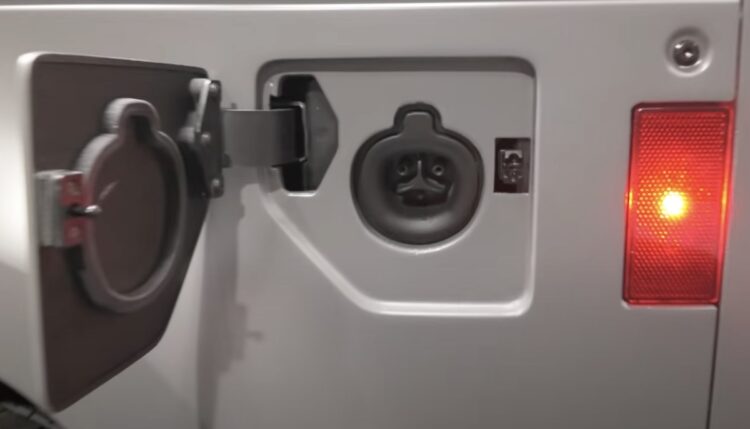
In an era where infotainment glitches account for most vehicle warranty claims, Slate’s no-screen approach might be refreshing. But it’s also risky. Consumers have grown used to luxury finishes, touchscreens, and endless options. The Slate Truck is a rolling rejection of modern automotive bloat—a bet on minimalism, utility, and affordability.
Whether it succeeds depends on the market’s willingness to trade tech for transparency, complexity for creativity, and consumption for customization.
Can the $20,000 Slate Truck Spark a New Era for American Electric Vehicles?
The Slate Truck electric vehicle $20,000 American made isn’t just a product—it’s a statement. By stripping down what a vehicle needs to be, Slate challenges long-held assumptions in the EV market. If it resonates with buyers looking for a low-cost, high-utility, tech-free experience, it could become the blueprint for a new class of American EVs—one defined not by bells and whistles, but by function, freedom, and affordability.